
No Beef About It: Farmer’s Resolve Shines Amidst Hardship
Like most farmers, Grant County beef farmer David White faces difficult decisions on a regular basis, but none was more difficult than when doctors asked him whether or not to amputate his arm.
In 1991, David caught his left arm in a forage blower and sustained a severe injury between his wrist & elbow. “The blower basically cut it off, broke the bones and everything was severed … just hang ing together…”
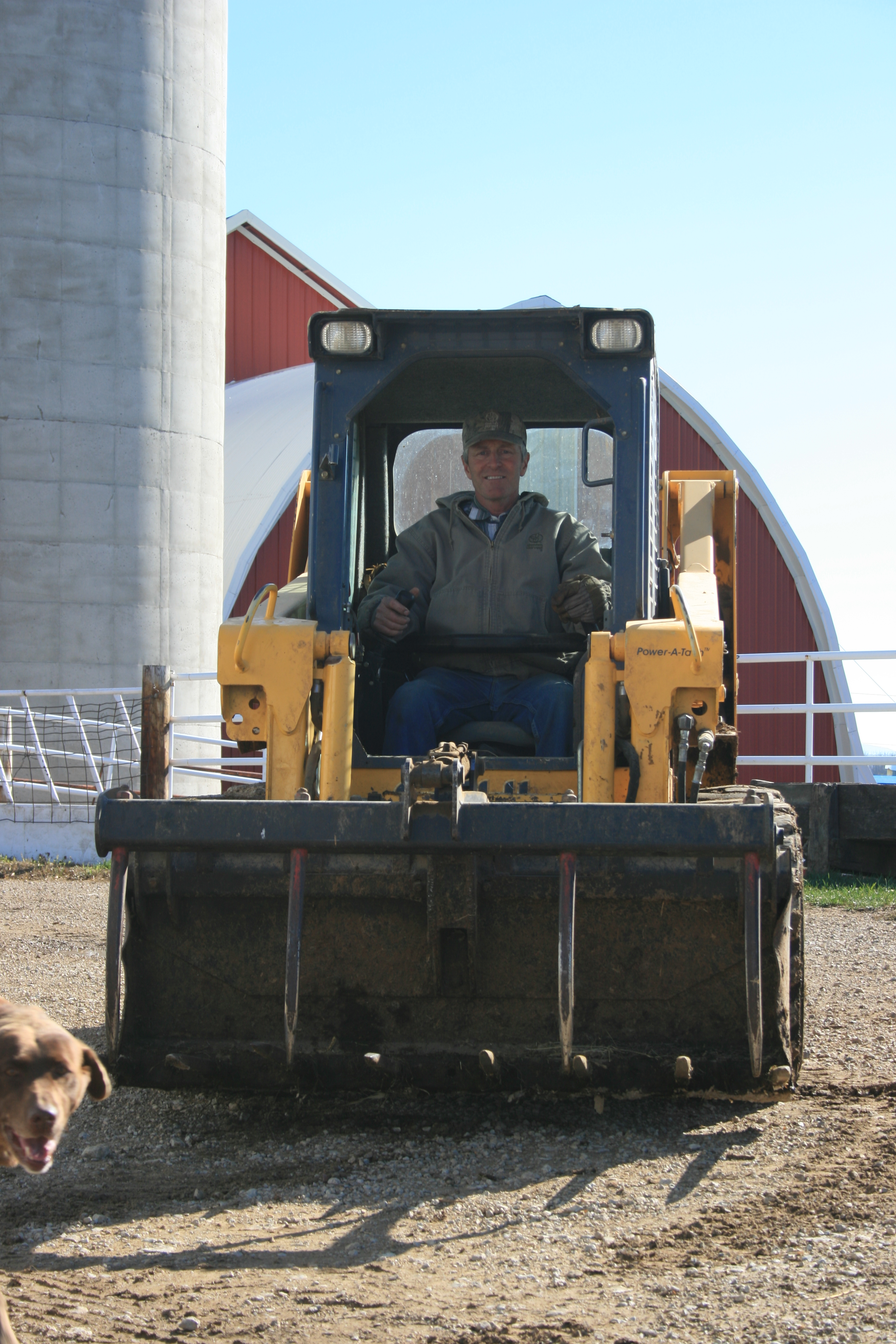 “I went up to the UW [Hospital] in Madison and after about the third surgery the doctor said ‘We’ve got to decide what to do, whether to keep going or take it off.’ I thought, I’m young and I’ve got insurance, I was only 32 at the time [if] we get all done and it doesn’t work we can always take it off, but if we take it off now we’ll never know what I could have had.”
David stayed in the hospital for 49 days and underwent a total of ten surgeries. Doctors were able to reattach his arm, but David was left with little to no feeling in his arm, limited use of his fingers, and an inability to twist his wrist or turn his arm except at the shoulder.
“[The doctors] couldn’t believe after I got out of the hospital and went back for checkups how much use I could get out of it. The doctor told me ‘If you would have worked in a factory or someplace you would have been on total disability the rest of your life.”
However, despite the doctors’ optimism about his recovery, David was finding it difficult to perform many of the day-to-day tasks that his family’s dairy operation required. ”At that time, I was back on the family farm, was milking 175 cows and had 200 beef cows. After [the accident] I couldn’t milk cows any more because I couldn’t handle the milkers. There was a lot going on and I couldn’t really keep up with it. So we decided I could do the beef thing without a lot of problems.” As a result, in 1993 David bought a farm and began his own beef operation.
After several years of farming with his new limitations, David read about AgrAbility of Wisconsin in a farming magazine. “We contacted them and they came out and went over things and said I was eligible, so we started the process.” Bruce Whitmore, one of AgrAbility’s Rural Rehabilitation Specialists, was able to help David to identify his needs and work with the Division of Vocational Rehabilitation to secure the assistance that was needed to help David continue farming safely and successfully.
“They extended the [silo] cage for climbing up and down… as a safety feature. In my grain bin, I didn’t have a sweep auger and I always had to shovel everything to the middle, and they set me up with a sweep auger to put in the bin, so it eliminated shoveling the last 1200 bushels of corn by hand.” David said there were “a lot of little things that helped… they seemed like little things, but they all cost money [and] they sure helped in cut ting down labor and things like that.”
When asked about the most useful piece of assistive technology that he received, David replied “The tub and alley system for working the cattle is probably the number one. All [the equipment] are really important factors, but the [alley system] really cut down on a lot of labor. Those beef cows after they’ve been down that alley and through that shoot and stuck with a needle or preg checked a few years in a row, they figure out when
they go down that alley it’s going to hurt… so they fight you continually. Now once we get them in that barn and close that gate there is no place for them to go but down that alley. It sure takes a lot of stress off of us. One year, I was in there trying to get them to go behind a gate and got pinched between a few cows… I was laid up for about 3 months that time. It’s a big safety factor is what it really is.”
Today, thanks to his determination, his loving family, and a little help from AgrAbility of Wisconsin, David runs a successful beef operation. His cattle have won numerous awards and have been exhibited on local, state, and national platforms. When asked about what has kept him going after his accident, David responded, “We had to farm; I had a family; they have to eat. There are things on the farm that have to be done, you just have to get out there and do it. If you can’t do it, you find a way to do it. Where there’s a will there’s a way- that’s always my motto.”
Grain Dust and Your Health
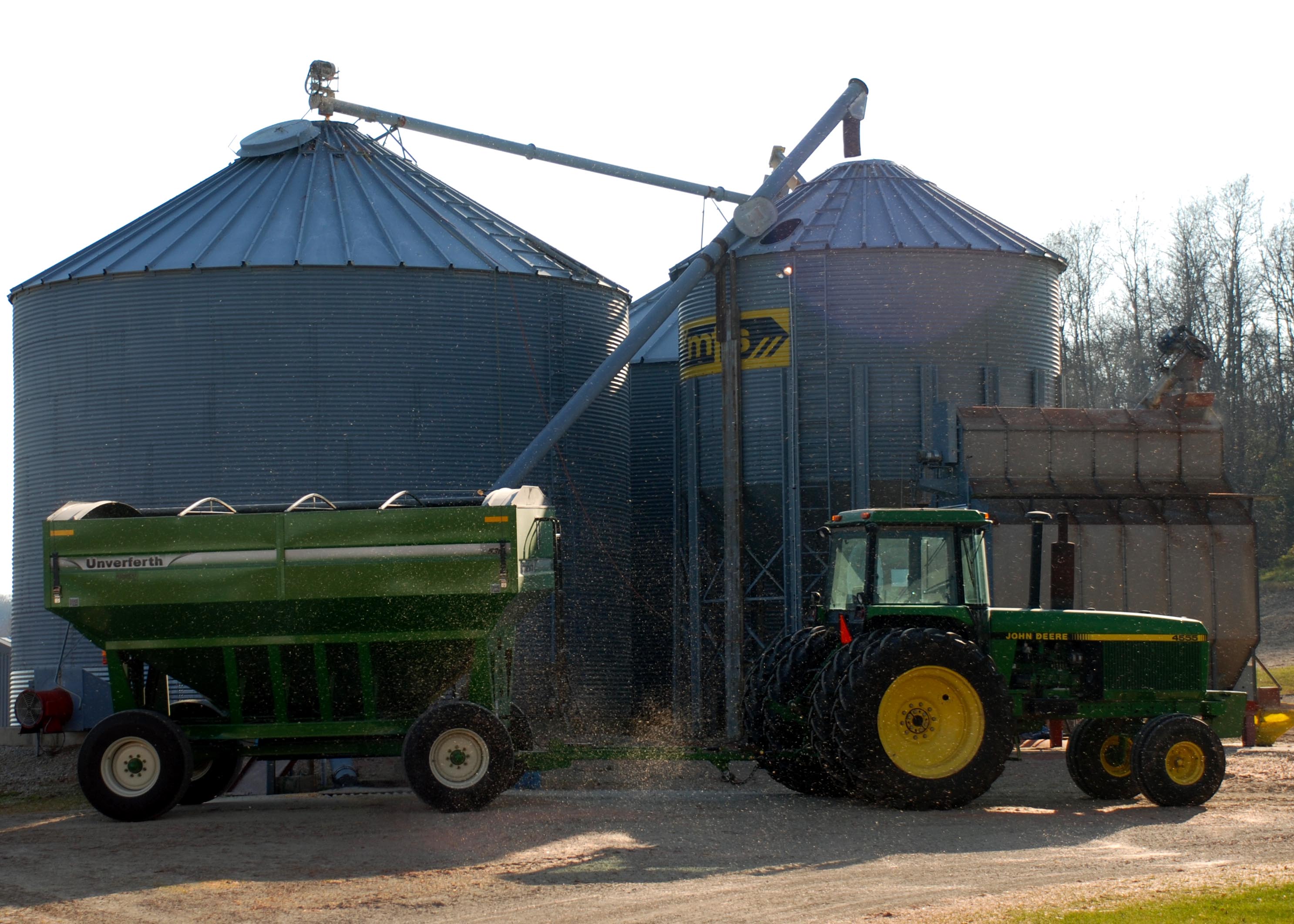 It is important for people working with grain to understand the potential health concerns associated with grain dusts. Grain dust can be a mixture of particles of grain, soil, plant material, fungi, bacteria, residues of agricultural chemicals and the excreta of insects, rodents and birds. The mixture varies with the type of grain, growing conditions and how it was harvsted, stored and processed. Spoiled grain is especially contaminated with dust
and bacteria. These dusts can affect the respiratory tract in a variety of ways (see table below) and can cause gastrointestinal problems, skin rashes and eye irritations. Individuals may react quite differently to the same dust depending on their work history, health status and smoking history. Thus, some people may be quite sensitive to the dust while others may be able to withstand several exposures prior to becoming sensitized.
| Respiratory Disease | Symptoms | Comments |
| Inflammation of air passages, upper airways, acute bronchitis | stuffy nose, runny nose, sore throat- cough, spitting up phlegm, labored breathing | These common reactions are bothersome but cause no permanent damage. |
| Asthma (often called grain asthma or barn a]- lergy) | wheezing,labored breathing, cough | Asthma may be an immediate response to grain dust, may be delayed for several hours or may recur succes- sive nights following exposure. |
| Chronic obstructive pulmonary disease chronic bronchitis airway obstruction | recurring cough, phlegm productionfor two or more years,labored breathing, wheezing | Prolonged exposure to grain dust can lead to perma- nent lung damage. Cigarette smokers experience these same symptoms. And cigarette smoking grain han- dlers often get these respiratory symptoms sooner, or at a younger age, than nonsmoking grain handlers. |
| Toxic Organic Dust Syndrome (TODS) (sometimes called grain fever) | flu-like symptoms in- eluding chills, flushed face, muscle pain, gen- era!bodily discomfort’ | TODS follows heavy exposure to grain dusts. Symp- toms occur for new workers 4 to 6 hours after expo- sure. can occur in other employees after temporary removal (such as on a Monday following a weekend at home). TODS also can occur among farmers afterexposure to confinement house dusts and moldy hay. |
| Farmers Lung | flu-like symptoms in- eluding cough,f ver & chills, labored breath- ing, muscle pain, general discomfort | Caused by dusts from moldy hay, silage and grain. Symptoms start 4 to 8 hours after exposure. Evensmall amounts of dusts can cause illness after a person has become sensitized. Can cause permanent lung damage and death. |
Cheryl Skjolaas is an Agricultural Safety Specialist with the UW Center for Agricultural Safety & Health. For more information on Silo Filler’s or other agricultural safety issues you can contact Cheryl via phone at {608)265-0568, or email at skjolaas@wisc.edu.
How Simple Plastic Can Help Save Your Back
Leveling bins, loading feed, and moving snow or dirt are common tasks for residents of rural Wisconsin. For some one with back pain or other physical limitations, tradition al shovels or other implements can be painful to use.
However, there are numerous simple, low-cost attachment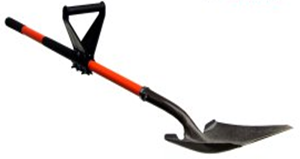 s for an array of long-handled tools such as shovels, rakes, pitch forks, and hoes that allow users to avert needless back strain. Attachments come in a variety of shapes and sizes depending on need and preference, and some attachments even help to increase leverage and control. An array of specialized tools with built-in modifications, not only spare your back, but often weigh less than their traditional counterparts. So whether you are gearing up to rake the yard or preparing to shovel the walk, be sure to think twice about your back!
If you’d like more information on specific tools, please contact the AgrAbility of Wisconsin office by calling (608) 262-9336, or contact us via email at aaw@mailplus.wisc.edu
AgrAbility Partners: Meet Your Editor
My name is Zach Stollfus and I serve as the new AmeriCorps FARM Outreach Assistant at AgrAbility of Wisconsin. A recent graduate of UW-Madison’s College of Agriculture and Life Sciences with a degree in horticulture, I serve as the editor of Plowing Ahead and have the privilege of traveling around the state to meet and record the stories of some amazing people who have been served by AgrAbility over the years. I also research and report on the latest in farm safety, assistive technology, and news from the AgrAbility office. I look forward to meeting some of you at trade shows, our Neighbor to Neighbor events, and online as you interact with AgrAbility’s Facebook & Twitter pages.
|
|
This material is based upon work supported by the Cooperative State Research, Education, and Extension Service, U.S. Department of Agriculture, under special project number 2014-41590-22330. UW-Extension provides equal opportunities in employment and programming including Title IX and ADA. If you need this material in another format, please contact AgrAbility of Wisconsin at (608) 262-9336. |
 Plowing Ahead