
Agriculture Assistive Technology Training
With more than 2,200 clients served and a 97% success rate over the last 20 years, Wisconsin is considered a national leader in agrability programs. As one of the longest continuously funded AgrAbility programs in the nation, this unique partnership between the UW Extension and the Easter Seals Wisconsin FARM program has set a standard for various agrability programs across the United States.
AgrAbility of Wisconsin recently has received a three year grant from the U.S. Department of Education’s National Institute on Disability and Rehabilitation Research (NIDRR). The grant provides funds for the Easter Seals FARM program to team up with the Council of State Administrators of Vocational Rehabilitation (CSAVR) to develop an agricultural training course for vocational rehabilitation specialists across the country. The Agricultural Assistive technology Training (AATT) project will wovide a specialized curriculum for vocational rehabilitation staff to increase their understanding of the unique circumstances facing their agricultural clients. The training will broaden their exposure to methods and technologies available to adapt to different types of disabilities. 
The intention of the AATT project is to demonstrate the viability of agriculture as a prqfession for people who are disabled. Agriculture has long been considered one of the most dangerous professions in the country. Farming accidents, along with recurring injuries and chronic illnesses, have lead the farm industry to have one of the highest rates of lasting injury and permanent disability in the country. The AATT project will teach vocational rehab professionals about assitive technology and the practices available to keep farmers and farm families in their chosen lifestyle. It is the hope of the AATT project that a training curriculum can be set in place to enable vocational rehab specialists across the country to support farmers with disabilities.
The AATT program will develop in two forms. The first is an in-state training curriculum that is being developed by Paul Leverenz, Vice-President of FARM and Vocational Services for Easter Seals Wisconsin, Manuel Lugo, retired Deputy Administrator for Wisconsin Division of Vocational Rehabilitation, Dr. Richard Straub, Project Director for AAW , Dr. Ron Schuler, former Director of AAW , and John Connelly, Assistant Direc tor for CSAVR. The team will take the program to vocational rehabilitation staff in five states.The second will be a development by UW Extension of an online curriculum that will be available to rehabilitation staff around the United States.
SAFETY FEATURE: Pesticide Injuries and First Aid
Various types of pesticides (insecticides, herbicides, fungicides, etc.) are formulated to control target pests; however, their toxic nature can make them harmful to people and animals.
If someone does suffer ill effects from an accidental exposure to pesticides, his or her symptoms most likely will fall into three general categories: heightened sensitivity, acute illness, or chronic illness.
Heightened sensitivity is an allergic reaction on an area of skin. Over time, a pesticide handler may develop an allergy to a chemical he/she has worked with for several years. A rash may develop on any area of skin that contacts the chemical.
Acute injury, appearing shortly after the exposure, is a common type of pesticide injury. Acute injuries are the immediate or near-immediate effects of accidental swallowing, skin contamination, or breathing toxic fumes. A skin contamination that is ignored or not dealt with could cause a skin rash in the exposed area. Often, sores or boils may appear shortly after a pesticide has come in contact with the skin.
The less common form of injury due to pesticide poisoning is chronic (long-term) injury. This type injury may require weeks, months, or even years after the initial exposure to the pesticide to develop symptoms. Chronic illnesses from pesticides may result in tumors or various cancers. However, over time, frequent minimal exposures to a pesticide can build up in the body and cause an acute reaction.
It is important to recognize the symptoms of chemical poisoning before irreversible damage occurs. Symptoms of swallowed and inhaled pesticides are generally the same, but inhalation may hurry effects of poisoning, which include: headache, nausea, dizziness, muscle twitching, weakness, and vomiting.
Swallowing a pesticide is a serious situation. The decision you must make with this accident is whether or not to induce vomiting.
* If pesticide is still in the mouth, wash it out with plenty of water.
* Quickly read the First Aid section of the label again to see if the swallowed chemical should be diluted. When swallowed, some chemicals should be diluted with water or milk. Other chemicals should never be diluted.
*Check to see if vomiting should be induced. If vomiting is to be induced, turn the victim so that he/ she is kneeling forward and does not choke. Ipecac syrup can be used to induce vomiting. If it is not available, put your finger in the victim’s mouth and touch the back of the victim’s throat. Do not use salt water to induce vomiting or attempt to give liquids.
* Do not induce vomiting if the victim is unconscious, because the victim could choke.
* First aid for some chemicals includes giving activated charcoal after vomiting. (Activated charcoal adsorbs many poisons and is available without a prescription. It is a powder mixed with water and given to the victim to drink.) Do not give activated charcoal and ipecac syrup at the same time; the charcoal adsorbs the syrup, and any good effects are wasted.
* Keep the victim calm and take him/her to the hospital.
An inhaled pesticide presents a different problem but is just as serious. Breathing a pesticide can hurry the effects of poisoning–quick action is a must.
* Get the victim to fresh air.
*Calm the victim, and have him/her lie down.
*An inhaled pesticide can cause convulsions, so protect the victim’s head if convulsions occur.
* Keep the victim’s air passage clear. Tilt the head back to keep the passage open. Remove any foreign object or matter from the victim’s mouth.
* If the victim stops breathing, begin artificial respiration and continue until he/she breathes again or until you reach the hospital.
The hands and forearms account for 95 percent of all skin exposures. Usually these exposures are caused by splashes or spills that occur while mixing the chemicals.
If a chemical gets on your skin:
* Immediately remove all contaminated clothing;
* Wash the exposed area with generous amounts of water and soap
* Use a brush and soap to remove residues from under your fingernails
* If your hair is contaminated, shampoo well
* Put on fresh, clean clothes
* See a physician
Credit: Mississippi State University Extension Services http://msucares.com!pubs!pub/ications!p1862.htm
Easter Seals FARM Pride Project
In 2005, a group of former AgrAbility of Wisconsin clients decided to give back to the program. They pioneered the Easter Seals Wisconsin FARM Pride project. The project involves farners raising donated or purchased calves to feeder weight or more.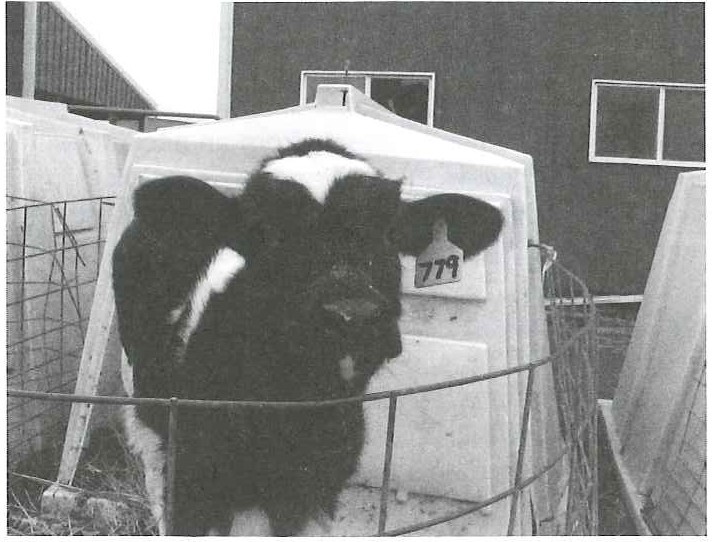
The animals are ssold with all proceeds from the sale going towards client services for the ESW FARM program. Former clients, community members, and business leaders volunteer their time and resources by:
– Donating animals and feed
– Hosting and raising animals
– Providing transportation to and from market
– Donating money
For more information or to get involved with the ESW FARM Pride project, feel free to contact T Ellenbecker, Rural Rehabilitation Specialist at 608-279-9437 or tellenbecker@eastersealswisconsin.com
Welcome Professor Straub
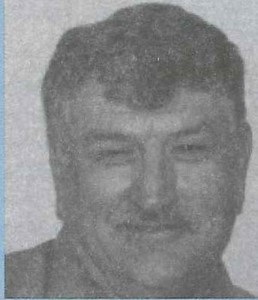 Professor Richard Straub is a fixture in the College of Agricultural and Life Sciences at the University of Wisconsin-Madison. When he enrolled as a freshman, he originally intended to be a chemical engineering major. En route to orientation, he recalled a history teacher mentioning a brother-in-law who was an agricultural engineer.He made a snap decision and proceeded to obtain his BS, MS, and PhD in the discipline. Following his doctoral research, he was awarded a faculty position in the Biological Systems Engineering department.
In 1996, Richard became the Department Chair for the Biological Systems Engineering department, a position he held unti11999, and then again from 2007 to the present. He has also acted as the Director of Agricultural Research Stations for the College of Agricultural and Life Sciences from 1999-2007.
When AgrAbility Project Director Ron Schuler retired, Richard stepped into the role. He has been involved in agricultural safety since the early 1990s when he collaborated on an agricultural machine safety project. He teachest an introductory engineering course at UW that encourages students to develop and design assistive technology for people with disabilities.
In his role as Project Director, Richard provides direction for the educational and outreach efforts on the UW-Extension half of AgrAbility of Wisconsin. He also oversees the post-service assessments nd program efficacy.
Richard has been farming for almost fifty years and maintains the farm his parents originally purchased in Oregon, Wisconsin. He keeps a 50-head beef herd and grows corn, soybeans, and hay.In his spare time, he drives the Zamboni machine for the Oregon High School hockey teams.
His academic and farming background make Richard uniquely qualified to head the AgrAbility of Wisconsin program and he wholeheartedly believes in its mission. “We’re helping people and giving them the opportunity to earn a living and participate in the profession that they love to do.” He looks forward to helping AgrAbility of Wisconsin grow and reach more clients throughout the state.
|
|
This material is based upon work supported by the Cooperative State Research, Education, and Extension Service, U.S. Department of Agriculture, under special project number 2014-41590-22330. UW-Extension provides equal opportunities in employment and programming including Title IX and ADA. If you need this material in another format, please contact AgrAbility of Wisconsin at (608) 262-9336. |
 Plowing Ahead