
Near death experience does not hold Eland Farmer back
September 25, 2008 began as a typical day for Gary Bessette of Eland Wisconsin. He was heading to Apple ton to pick up feed for his feed mill and everything went wrong. When he turned right, the front left tire blew, and he crashed into a semi. An EMT just off his third shift driving behind Gary revived him and called in the accident. “Had it not been for him I might not have made it,” Gary said. Gary was med-flighted to Theda Clark in Neen ah, and given 0% chance of living. The EMT’s on site called in and said they had a DOA (Dead on Arrival). His leg was severed right below the knee and numerous injuries, doctors said if his leg hadn’t been severed off he would have bled to death.
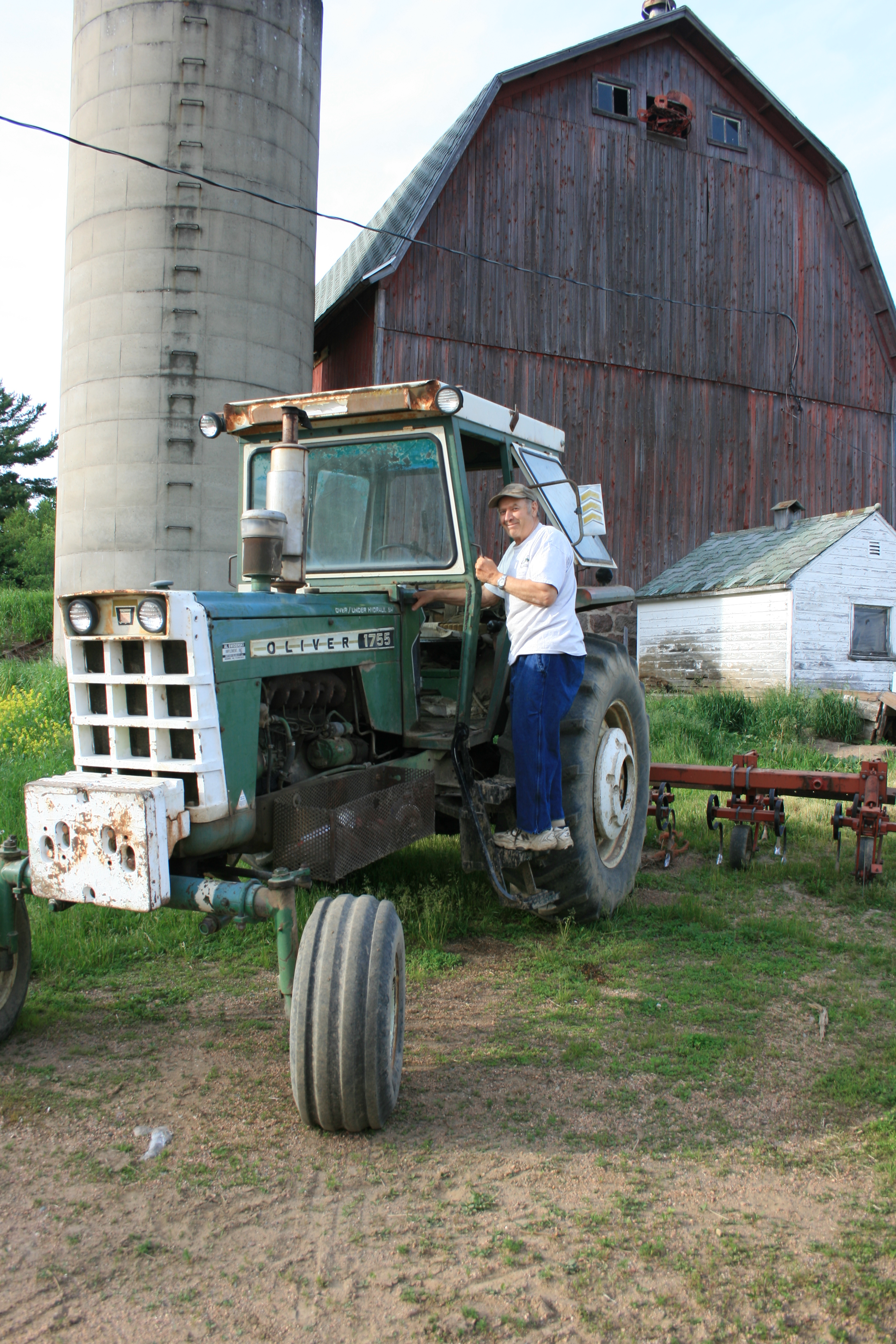 The healing process was very long for Gary after the accident; he spent a month in the hospital and 102 days in rehab at Mount View Care Center in Wausau. Gary’s son harvested all of the crops in the fall and then planted in the spring due to his recovery. He was very weak. Dealing with the loss of his leg just below the knee has been a learning process. He said, “I have a prosthetic now and can’t get around that quick anymore.” Besides tiring easily, moving and walking on uneven ground is a major challenge.
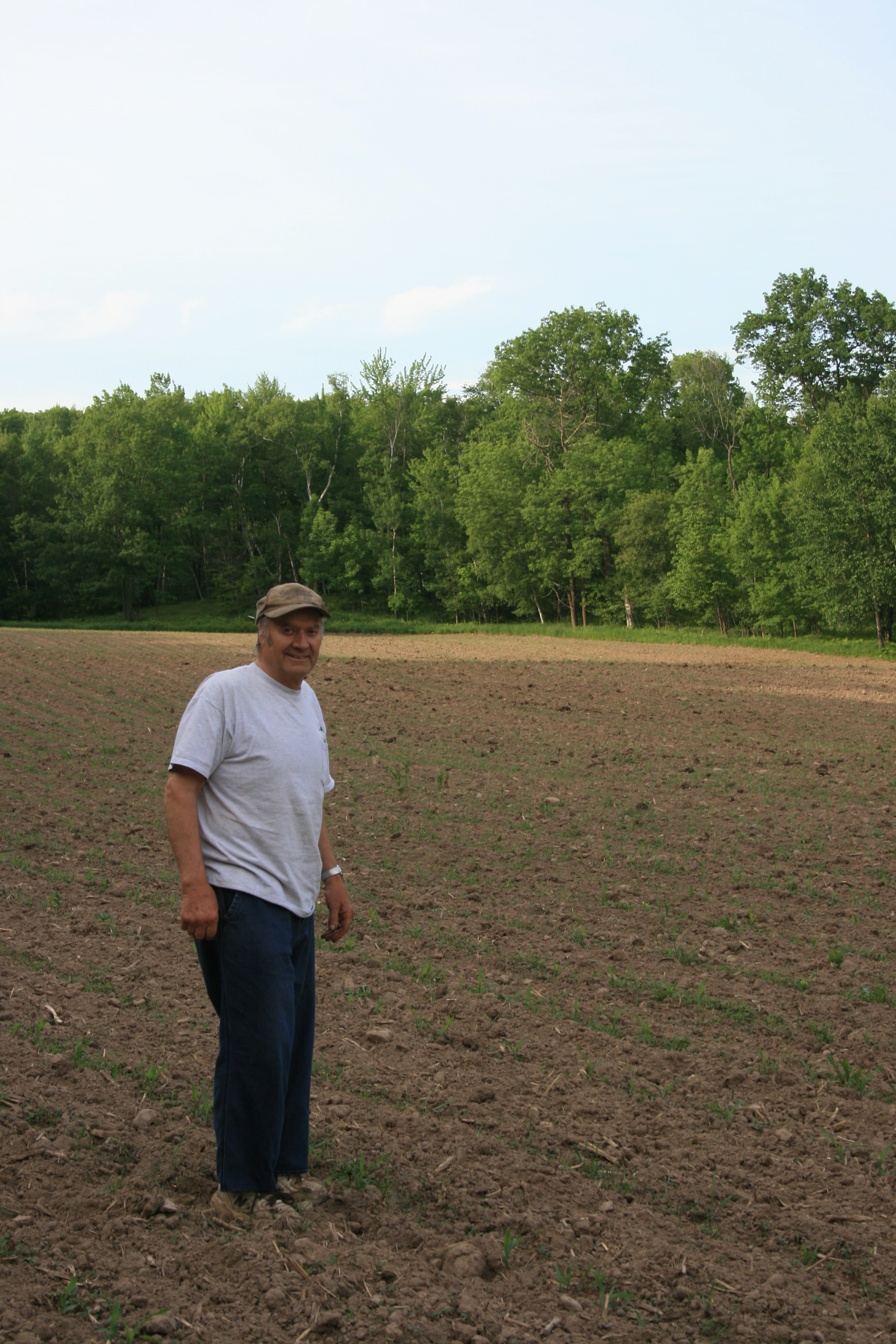
Gary started his feed business in 1960 and began to farm in 1965. He grows organic crops of corn, alfalfa and soybeans. Before the accident he had about 117 acres and rented about 54 more. Since the accident, he cut back by renting out some land for ginseng. He now runs about 10 acres of organic oats and alfalfa, 27 acres of organic corn, and 23 acres of organic soybeans. “I thought it would be something different and I don’t like working with all of the chemicals anyways,” Gary said when asked about his field work. He has a specialty business sending his crops to Antigo, Coleman, and even Shawano. There is a demand from dairy and livestock farmers’ in his area, being organic is a good niche.
Gary learned about AgrAbility of Wisconsin in 2009 from a former client who does business at the mill. While he was recovering, he was a little reluctant. As an independent person, he especially did not like the idea of welfare, so exploring AgrAbility of Wis consin he had nothing to lose. “The process was as quick as I figured,” Gary stated. He understood that change takes time and also the amount of time it would take to get all of the assistive technology lined up for him. It is not something that happens overnight.
 The long term goal for Gary was to stay with his crops. With the Help of Rehabilitation Specialist for Easter Seals, Jeff Kratochwill, Gary was able to evaluate options of assistive technology. With the support of the Division of Vocational Rehabilitation he was able to gain financial assistance to add hand rails for his tractors and extra steps. A Kubota also was purchased to get around his farm and to check his crops. Although the rock picker only gets so many rocks, he can now go out with the Kubota with a fork and spot pick. Hand controls were also installed into his tractor allowing him to operate more controls with his hands rather than his feet. It was not until the hand clutches were installed that Gary could adjust and quickly learn how to operate again in the tractor.
Before the accident, “I still could make the team” (playing softball). Gary was fit and actively involved with numerous organizations. After the accident hunting and fishing, and an occasional vacation gives Gary relief from farm life. Even with the accident and his limitations he does not look back. He is still very active in his FFA alumni association and loves being outside.
“The doctors never said I could not farm, but even if they told me I couldn’t, I am going to farm until I can’t crawl into the tractor or combine cab anymore. Then I will think about retiring,” Gary said with a smile. He feels he is truly blessed to be alive doing what he loves.
Items Available on Ag Equipment Exchange Site
Current items available on the Ag Equipment Exchange website include a Bale slicer, Medi-Dart system, Mirafont waterers, Freestall Dividers, Berg Belt Conveyor, Thrifty long handled teat dip, Hydraulic Controls, Tractor Chair Lift and a Electric Wheelchair .
We have had 3 farmers exchange the following items; a suspension seat, a gate, and automatic hitches. These exchanges were donated by farmers in the AgrAbility program for other farmers in the program.
Want to post an item or search for something? Check out the exchange site at http://farm.eastersealswisconsin. corn!content/agriculture-reutilization-resource If you need help or have questions about posting equipment, finding equipment, or responding to a post, call Bruce Whitmore at 920-675-0570. If you do not have internet connections and would like to post an item, Bruce can help, or you can call Melba Brown at the FARM Program, l-800-422-2324 Ext 106. All postings will be viewed by FARM staff before they are posted on the website.
Partners…Jeff Kratochwill
I have enjoyed the past four years working as a Rehabilitation Specialist for Easter Seals Wisconsin, a program within AgrAbility and the people that I have met during that time, including farmers, implement dealers, and various partners such as UW-Extension and the Department of Workforce Development. I conduct on-site farm assessments, usually throughout North Central and Northwest areas of Wisconsin, identifying problem areas as they relate to the farmers disability, developing some recommendations for accommodation, and helping to implement any changes. The job is especially rewardirlg when 1 talk to farmers that I had worked with several years ago and they tell me that they would not be farming without the assistance that they received.
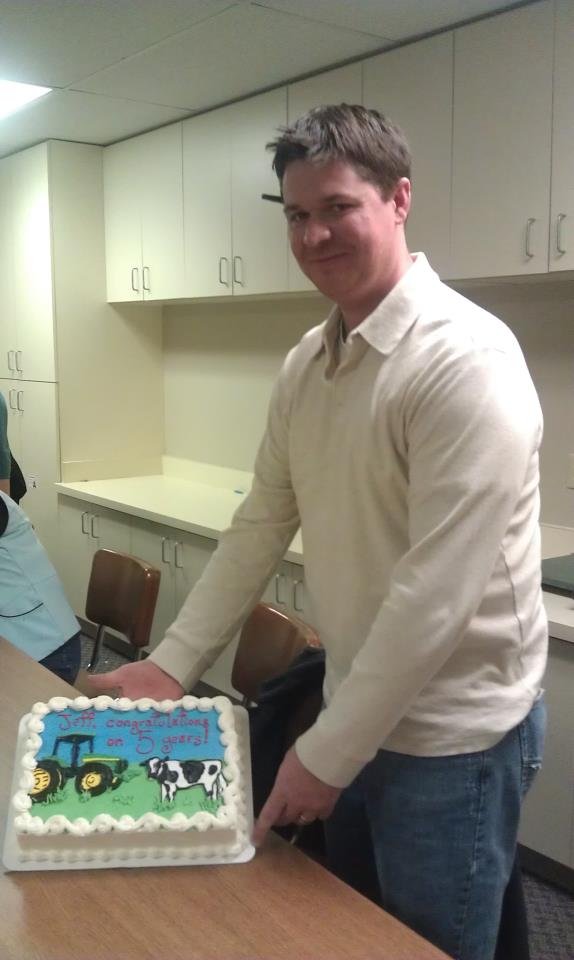 I was born and raised on a dairy farm in southwest Wisconsin, about 70 miles southwest of Madison. My father took over ownership from my grandfather and has owned the farm solely for almost 40 years. He still owns and operates the farm, but has changed from a dairy operation to raising beef animals. After graduating from high school I attended Madison Area Technical College. I obtained an Associate degree in Occupational Therapy. I also spent some time at University of Wisconsin-La Crosse before obtaining my bachelor’s degree in Business Management and Communications from Concordia University. Before this position, I had worked in several rehabilitation sites and helped persons recover function following a decrease in their health status.
I look forward to continuing to be out in the communities, meeting farmers and assisting them in reaching their individual goals.
Safety First
Medications and the sun…
Photosensitivity, or sensitivity to sunlight, can result due to a variety of medications and medical conditions. The common misperception is that photosensitivity reactions, as a result of medications and conditions, typically occur only during summer months. This notion, however, is false. Photosensitivity reactions can result during anytime of the year. Knowledge and preparation are keys to avoiding potentially harmful effects from the sun.
Potential reactions to the sun include various types of response. Many people will experience a reaction similar to sunburn.
This type of reaction often occurs several hours after exposure. Others will develop a rash with intense itching. Rash may occur promptly with exposure to the sun ‘s rays. In rare cases, changes to the color of the skin may occur.
Knowledge of when to take protective measures can result by increasing your understanding of the medications you take. Ask your pharmacist to discuss the potential of photosensitivity resulting from your medication. Common culprits include some acne products, blood pressure medications, diabetic medications and antidepressants. These medications can cause harmful ef fects with minimal exposure to he sun. Certain classes of antibiotics may also result in increased sensitivity.
Important measures can be taken to avoid reactions to sunlight. You can accomplish this by minimizing the length of direct exposure to the sun, especially during the hours of 10 a.m. to 4 p.m. Sunscreen with a SPF of 15 or greater should also be worn. An alternative or addition to sunscreen is protective clothing, such as long sleeves, long pants, a hat and sunglasses which pro vide a good barrier to the sun ‘s harmful rays.
Reactions to the sun as a result of your medication can occur at an ytime of the year. Pay attention to new medications and al ways remember to ask your pharmacist if exposure to the sun is an issue. Knowledge and preparation will help you to minimize harmful reactions. Enjoy your time ou tside year-round without harmful effects that may occur later.
Submitted by: Jeanine L. Porter, Pharm.D., UW Madison
|
|
This material is based upon work supported by the Cooperative State Research, Education, and Extension Service, U.S. Department of Agriculture, under special project number 2014-41590-22330. UW-Extension provides equal opportunities in employment and programming including Title IX and ADA. If you need this material in another format, please contact AgrAbility of Wisconsin at (608) 262-9336. |
 Plowing Ahead