
Willingness to Change prompts Organic Dairy Farmer’s Post-Accident Success
November 2, 2009 seemed like an ordinary day on the farm for Mike Baumann. A successful dairy farmer, he had made the transition from conventional to organic farming a few years earlier, and was in the middle of harvesting corn for feed. “We were picking corn and the corn wasn’t dry…It plugged up [the picker] and I didn’t shut it off and tried to unplug it while it was running and I got my hand caught.”
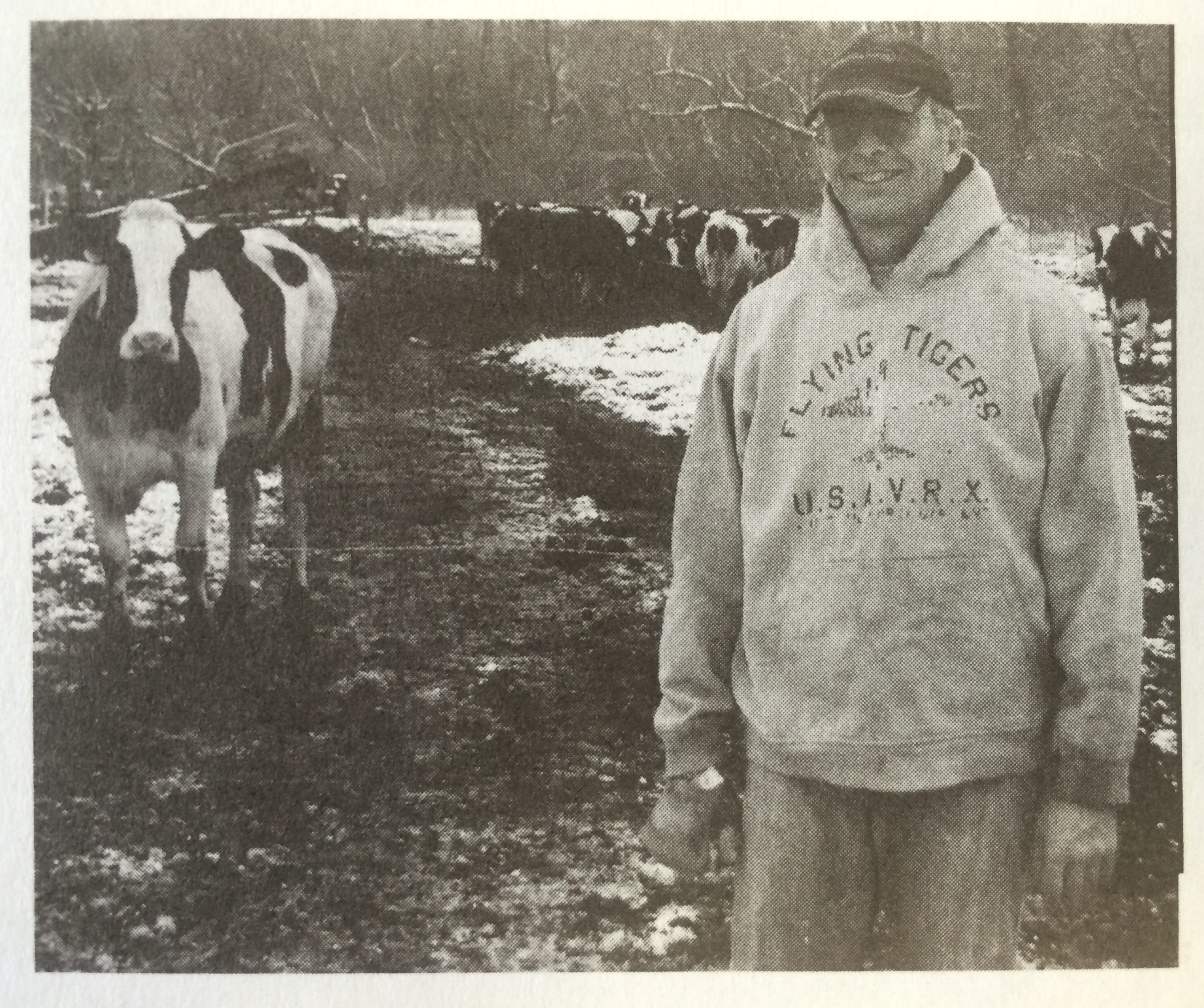 Baumann was hospitalized and underwent a series of surgeries to repair the dam age to his arm. “I was in and out of the hospital and had four surgeries on my hand. I was out of the barn for two months,” Baumann said. Bauman lost four fingers in the accident and was left with limited fine motor skills and an inability to perform certain tasks that require two hands. “My agronomist and nutritionist gave me [AgrAbility’s] phone number and said ‘you call these guys, they’ll help you’. He had seen other places where [AgrAbility] had been and had helped the fellows out a lot.”
Baumann did call AgrAbility and Jeff Kratochwill, one of AgrAbility’s Rural Rehabilitation Specialists, was assigned to the case. “He came and spent some time here. He looked at the equipment and the operation and made some suggestions, giving me ideas of what I could do on my own and what AgrAbility could do to help me. He really understood what was going on.”
With Kratochwill’s help, and with assistance from Wisconsin’s Division of Vocational Rehabilitation (DVR), Baumann was able to make some critical changes to keep his farm running. “We tossed around the idea of [my] doing something else, but when Jeff came out, it was at the time the job market didn’t look very good, and they figured it would be better to do things to keep me farming than to train me into another field. DVR was able to help Baumann purchase a skid steer and TMR mizer, which would help Baumann accomplish the same chores in a different way. “Jeff suggested we use silo bags and use the skid steer to load out of the silo bags into the mixer and then we got some bunks that we drive by to fill for the cows.” These changes helped to limit the tasks that required repetitive motion and two hands, such as climbing silo towers, pushing feed carts, carrying mineral pails, and moving hay bales.
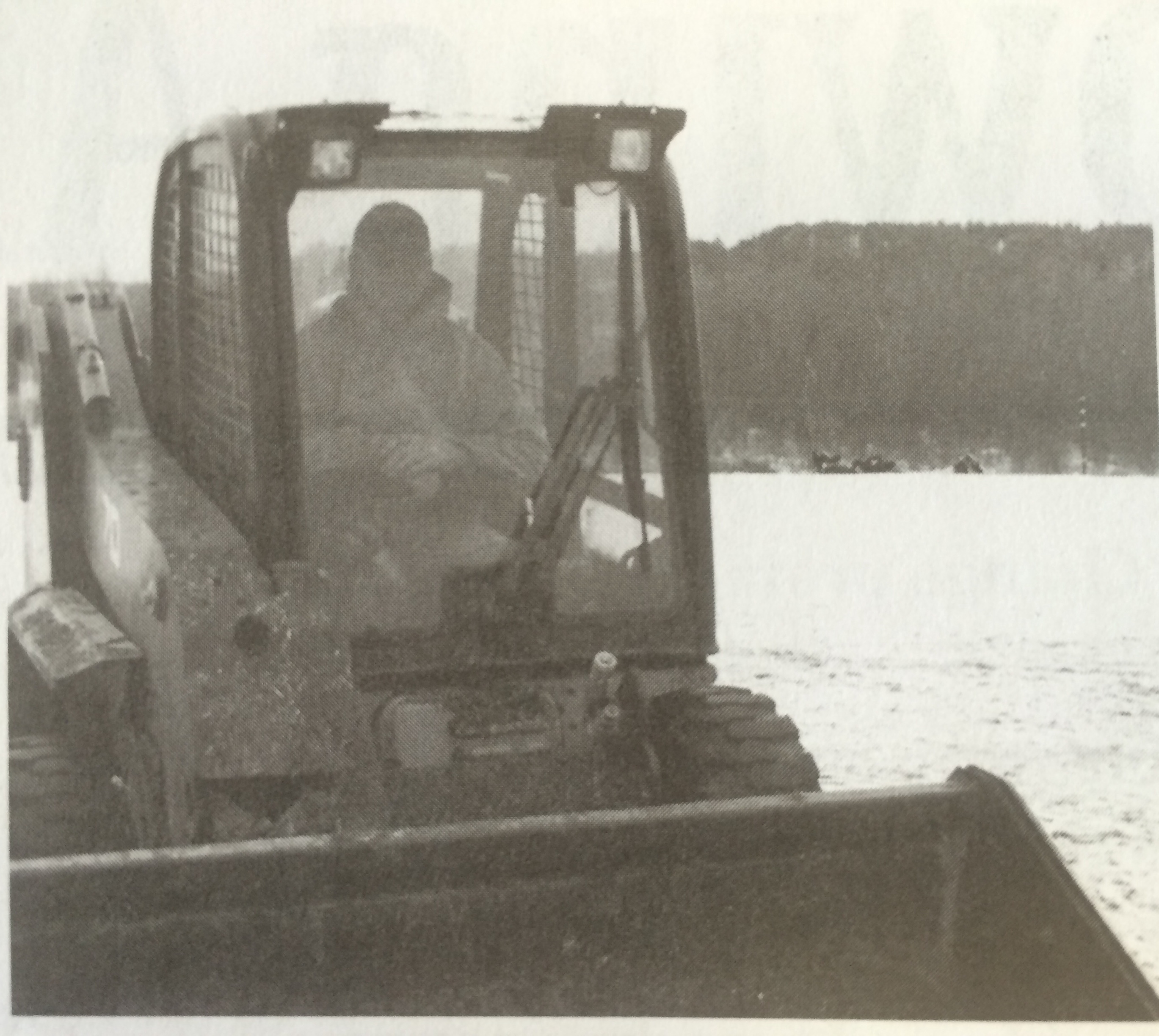 The changes worked; today, Baumann continues to farm with the help of his wife and two sons. Despite limited movement in his arm, and difficulty with fine motor skills, Baumann manages to take care of 57 cows on 210 acres. They have been certified organic since 2003 and sell their milk to the Organic Valley Dairy Cooperative. When asked to give advice to a new client enroll ing with AgrAbility, Baumann said, “You’ve got to be willing to change. Be open to the ideas of the help you’re being given. You do have to change your line of thinking and your ways of doing things, but it’s usually for the best.” Baumann added; “”m just glad for all of the help- very glad.”
Baumann will be hosting an AgrAbility Neighbor to Neighbor gathering, a time when current, and potential clients can come together and hear from Baumann and other past clients about AgrAbility first-hand. If you‘re in or around the Dunn County area and would like to get more information about the event, please call our office at (608) 262-9336.
–AgrAbility of Wisconsin’s-
PARTNERS…
Three years ago I made a difficult decision to leave AgrAbility of Wisconsin. As I knew I would, I miss the amazing individuals that
I met and worked with during my time as the Outreach Specialist. However, the next chapter in my life brought me to another organization that serves farmers. As the Public Affairs/Outreach Specialist for the Wisconsin Farm Service Agency, I continue to have the opportunity to serve Wisconsin farmers. FSA provides federal program benefits such as farm operating loans, farm ownership loans, commodity price support, disaster relief, emergency assistance and conservation. In particular, the FSA farm loan pro gram provides potential opportunities to AgrAbility of Wisconsin participants.
FSA farm loans is a program that benefits farmers by making and guaranteeing loans to purchase real estate, cover operating costs or to provide assistance for financial setbacks due to natural disasters. Farmers participating in AgrAbility may have the opportunity to benefit from these farm loans to purchase assistive technology through operating loans. Individuals planning to start a new career in farming can find assistance through FSA’s beginning farmer loans.
FSA provides direct and guaranteed loans. Direct loans provide farmers with low equity or repayment ability to obtain lower, fixed interest rates and longer terms than normally available. FSA also partners with local lenders to provide guaranteed loans that can sometimes be offered at a fixed or lower interest rate and longer terms.
Anyone interested in learning more about FSA’s farm loans can contact their county FSA office for more information. The Farm Loan Officers will be abl e to provide detailed information on the avail able loans and provide step-by-step assistance throughout the process.
Wisconsin FSA Public Affairs & Outreach Specialist

Need a Lift?
A donor in the Marathon County area has made two Life Essentials platform lifts available for those in need. The lifts have been removed from equipment, but may need new attachment brackets available from the vendor.
Another donor in the Abbotsford area has made several Bergman a utomatic hitches available: one tractor unit, one chopper unit (with adapter), and three wagon units. Hitches would need to be picked up or shipping would need to be arranged.
Contact Bruce Whitmore by calling (920)675-0570 or via e-mail at bwhitmore@charter.net.
Counties at a Glance:
*Langlade County grows 11,000 acres of potatoes a year, and is No.1in state production
*Dane County farmers own and manage 70 percent of the county’s land.
*In 2007 Brown County dairy generated $200.7 million in sales; in comparison Green Bay Packer revenue was $197 million.
Information courtesy of UW Extension
Winter Weather, A Slippery Endeavor
Navigating the farm in winter can be perilous, so stay safe and be sure to equip yourself with all the tings you’ll need to have plenty of traction!
Many manufacturers have ice-gripping cane or crutch attachments that consist of a set of steel teeth that fasten to the bottom of the cane or crutch to prevent slipping on ice. Often the teeth can be folded safely out of the way when the cane or crutch is used indoors.
Ice-gripping shoe slip-overs are lightweight rubber half-shoes with imbedded, stainless-steel spikes that stretch over regular or work shoes to improve traction on icy surfaces.
A steel grid-work ramp allows water, snow, and even mud from shoes or a wheelchair to fall through its grid-work The ramp reduces ice and snow buildup, increases traction, and helps to remove snow and ice from wheel chair wheels before they enter the house or work area.
|
|
This material is based upon work supported by the Cooperative State Research, Education, and Extension Service, U.S. Department of Agriculture, under special project number 2014-41590-22330. UW-Extension provides equal opportunities in employment and programming including Title IX and ADA. If you need this material in another format, please contact AgrAbility of Wisconsin at (608) 262-9336. |
 Plowing Ahead