
The Sky is the Limit for Chilton Farmer
Living with Spina Bifida can be seriously limiting, but not for Chilton farmer Adam Faust. Since Faust was young, he has been helping out on his parents’ dairy farm.
“The main challenge for me is balance. Balance and weak legs” said Faust, a second-generation dairy farmer. Faust, like all people with Spina Bifida, was born with the condition. Spina Bifida literally means “split spine” and occurs before birth, when the baby’s spinal column does not close all the way. This can cause impaired movement, loss of strength, and other severe limitations.
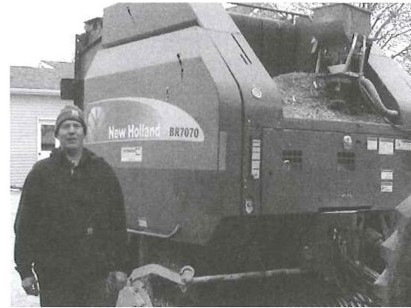 Despite Spina Bifida, Faust, like most who grow up on dairy farms, was regularly lifting, bending, and doing other strenuous and often repetitive physical labor. “I used to get feed in 100 pound bags, I’d have to take the feed and pour it into five gallon pails to feed my calves,” Faust said. “I was helping out [on the farm] since I was really young, but I started assuming some ownership right out of Short Course in `99. I heard about [AgrAbility], but had never thought of really using i, until my dad was laid up.” Said Faust, “I thought it would be nice to have a parlor to milk in and maybe that would be something they could help out with. I found out they could do some things with that, but it wasn’t necessarily the right thing for me to do at the time.”
Faust called AgrAbility and Paul Leverenz, now Vice President of Vocational Services for Easter Seals of Wisconsin, came to Adam’s farm. “Paul came out and did that whole evalua tion. He found a whole bunch of things (to help make farming easier] that we never really thought of, but they turned out to be really great things.”
“On a farm visit our goal is to identify the disability-related barriers and then work with the farmer to find solutions.” Leverenz said.”This could include eliminating the activity, reassigning the work activity to someone else, restructuring the task or introducing equipment to modify the work.”
“The way we used to feed inside the barn. We were handling all the feed twice. [Paul] found an electric feed cart that’s narrow enough to feed from both sides, so I don’t have to fork and shovel anymore.” The manufacturer attached a riding platform to the cart to help Faust maneuver easily through the barn and eliminate pushing the cart.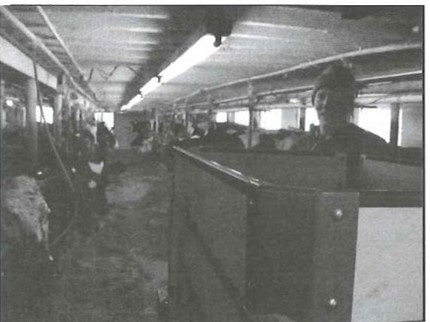
“One thing I thought I didn’t need was a utility vehicle” Faust said. “Paul really strongly recommended that I go look at them … and now I use it virtually every day.” Faust uses it for transportation and for moving things like hay and feed. “In winter I don’t walk on ice real well because of my balance, so I keep [the utility vehicle] in the garage at night and drive it right into the barn so I never have to walk on ice.”
When asked about his future in farming, Faust said, “I think everything is an evolution. I don’t necessarily want [the farm] to be much bigger, I just want to do better with what we have.” When asked if he had any advice for those thinking of enrolling in the program, Faust gave the program high marks and added, “Be willing to stay at it. It took a little time and extra effort. Be patient.”
Partners…
The Wisconsin Farm Center provides cost-free services to Wisconsin farmers needing help with financial concerns, farm transition, power quality problems, beginning farmer challenges, and help finding in formation or places that can help with a problem. It is a service of the Wisconsin Department of Agriculture, Trade & Consumer Protection and has been available to the State‘s farmers since 1984. Farmers like the confidential, practical information provided by staff.
Farm Center staff includes a specialist in beginning farmer and farm transfer issues as well as a financial analyst who can help with cash flow problems, debt restructuring, or getting prepared to ask for a loan. In addition, two staff veterinarians are available to offer a dairy herd diagnostics program to help solve production or herd health issues. Mediation services for disputes are also available. Farm Center staff are very knowledgeable about state and federal programs available to assist farmers. In addition to helping in times of stress, the Farm Center can connect farmers to people who can help with expansion or value added plans for their operation.
our Summit was a Success!
As if farming wasn’t already hard enough, throw in arthritis and trying figure out the rules and regulations of transitioning the family farm, and your full-time job just got a lot harder.
These and other issues were covered at AgrAbility’s first-ever Summit in Marshfield, on April 12th. The event was hosted by the National Farm Medicine and provided the opportunity for attendees to hear from a variety of organizations including The Wisconsin Arthritis Program, The National Fa rm Medicine Center, and The Wisconsin Farm Center. Topics covered included managing arthritis, preparing for your financial future, and services provided by the National Farm Medicine Center.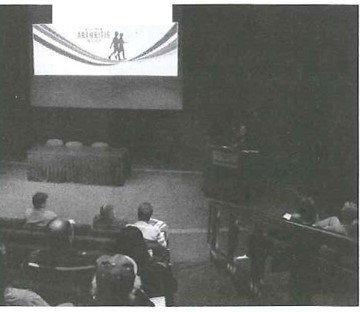
If you would like more information on the Summit or the organizations and services represented, please call the AgrAbility office at (608) 262-9336.
Farm Pride Project
It has been business as usual for farm families in Wisconsin. The communities supporting these farm families see them continue to work even when faced with adversity. Unpredictable weather, fluctuating farm costs, farm accidents and illnesses can all be significantly life changing. Adversity affects not only the farmer but everyone’s lives they touch. Farmers whose heart and soul are in working the land and giving back to the commu nity have done just that for the Easter Seals Wisconsin FARM (Farm Assessment and Rehabili tation Methods) Program. Our program works with farmers with disa bilities to identify task changes or accommodations that might make their work easier.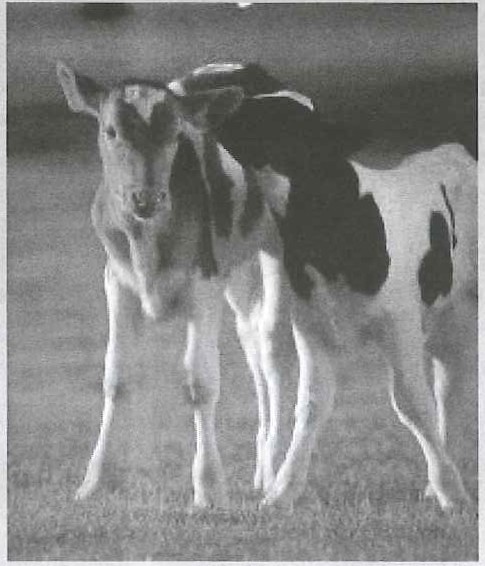
Easter Seals of Wisconsin is a non-profit organization with operating funds coming from traditional sources such as trust funds, grants, private donors and fund raising events. A fund raising op portunity presented itself approximately seven years ago when the FARM Program was approached by two farmers, one from Central Wisconsin and the other from Fox Valley. Because the FARM Program was there to assist them at their time of need they felt it was their turn to give something back.
They suggested the basis for what is now known as the Farm Pride Project, in which a host farmer would raise a donated calf or calves to a certain weight and sell them.The proceeds would come back to Easter Seals Wisconsin as direct service dollars. Animals, feed, housing, labor and transpor tation would all be donated. The FARM Program thought the proj ect would be worthwhile as fund raising is an important part of our existence. The Farm Pride Project was implemented in 2005 and is still going strong.
Through the philanthropic efforts of several farmers, farm family members, and community donations, Easter Seals of Wiscon sin’s FARM Program has benefited from their generosity and efforts, and the farmers themselves reap the benefits through continued program service. The Farm Pride Project is always looking for vol unteers to raise animals, provide transportation, and provide or make community contacts. If you are interested in this worthwhile project and would like further information or to volunteer please call T Ellenbecker, Farm Pride Project Coordinator at (608) 279-9437 or Melba Brown, Easter Seals Wisconsin FARM Program Madison office at 1-800-422-2324.
Living Well with Arthritis
Arthritis is one of the most common chronic conditions in the United States and the world. In Wisconsin 1.1 million adults (28%) report having arthritis. Although arthritis is a leading cause of disability, effect treatments and program are readily available.
Get an Accurate Diagnosis- If you’re experiencing pain and stiffness that you think may be due to arthritis, see your doctor and get an accurate diagnosis.
Pick, pour or peel- Reach for an orange, eat a potato or drink a tall glass of orange juice. Recent studies show the importance of vitamin C and other antioxidants in reducing the risk of osteoarthritis and its progression.
Move differently- while you might be running around the farm all day, exercising and stretching the whole body helps lessen pain, increase range of motion and heps you feel better overall.
Protect yourself when you go out in the sun. Wear sunglasses, a hat and sunscreen. Some forms of arthritis, as well as certain medications, can leave you more vulnerable to the sun’s harmful rays.
Lose weight- You won’t just look better, you’ll feel better too. Every extra pound you carry around translates into added stress on your knees and hips. Excess weight can mean more pain, no matter which form of arthritis you have. It also can contribute to and aggravate osteoarthritis, while increasing your risk of gout.
For more tips, resources, programs, and information visit the Wisconsin Arthritis Program at www.wisconsinarthritisprogram.org or call the Arthritis Foundation at 1-800-333-1380.
Facts and tips courtesy of the Arthritis Foundation. Visit them online at www.arthritis.org.
This material is based upon work supported by the Cooperative State Research, Education, and Extension Service, U.S.Department of Agriculture, under special project number
2010-41590-20793. UW-Extension provides equal opportunities in employment and programming including Title IX and ADA. If you need this material in another format, please contact AgrAbility of Wisconsin at (608) 262-9336 or aaw@mailplus.wisc.edu.
|
|
This material is based upon work supported by the Cooperative State Research, Education, and Extension Service, U.S. Department of Agriculture, under special project number 2014-41590-22330. UW-Extension provides equal opportunities in employment and programming including Title IX and ADA. If you need this material in another format, please contact AgrAbility of Wisconsin at (608) 262-9336. |
 Plowing Ahead