
Paths of Optimism and Opportunity
To some farmers, a skid loader is an everyday convenience. It assists with tasks such as mixing and pushing up feed, heavy lifting, and moving bulky items around the farm.
To Steven Jenson, a skid loader is the difference between the ability to farm and the need to find other work.
Jenson, who grew up loving farm life, lost his arm below the elbow in a work accident during college. He had been working with lawn mower blades when he got his arm caught in a machine. Doctors were able to “work a miracle” and save the elbow, which Jenson said has been a huge advantage in the years since the accident.
Karla Friedli, Jenson’s daughter, recently completed construction of a show horse boarding facility between Menomonie and Eau Claire. She employs her father to assist in the construction of the facility and to haul manure, sawdust, large bales of hay, and compost.
Throughout the construction of the horse facilities, a skid loader was rented;so that Jenson could assist with the project. During this process, one of Friedli’s clients recommended the assistance of the Department ofVocational Rehabilitation (DVR), who then recommended AgrAbility to Jenson. Jenson worked with Jeff Kratochwill, an Easter Seals Rural Rehabilitation Specialist.”It was really great from the standpoint that he grew up on a farm, works on a family farm, and has a very strong working knowledge of the needs of a farm,” said Jenson. “It was an excellent interview, and I couldn’t have asked for a better situation than that.”
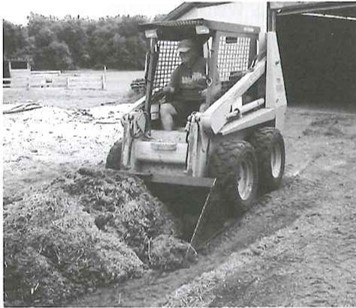 Kratochwill recommended assistive technology to Jenson, such as a powered feed cart or a skid loader that could be operated with one hand. However, Jenson felt that his daily tasks could be completed solely with the help of a skid loader.
“He has a great deal of enthusiasm about his business and is excited about their future prospects,” said Kratochwill. “I know that the accommodation allowed him to expand in doing things like selling compost to persons for residential gardens and such.”
Having his own skid loader has given Jenson the opportunity to grow and diversify the type of work he can do. “Having this as an opportunity to be employable to do landscaping, farm work, and chop firewood; I’ve used my skid loader to move things, it’s given me confidence and opportunity, and that obviously shows in my demeanor. Everybody around me benefits from that,” Jenson said.
According to Freidli, “Most of the things he does wouldn’t be possible without the skid steer. This has created a position for him. It’s nice for me to have him be independent; for me not to have to worry about him is great.”
Jenson says one of the best things about being able to continue work on the farm is to work with his daughter and see her success every day. “Just to be part of this whole program with my daughter has been a huge blessing to me,” he said. “Not all parents get to do that.”
Being able to remain employed on his daughter’s farm has also given Jenson the job flexibility to go on 13 mission trips to New Orleans since Hurricane Katrina. He has also been to the classrooms of his children to talk about living a normal life with one arm.
“The only time I notice I’m missing an arm is when I look in a mirror. I don’t feel handicapped,” said Jenson. Jenson says he is thankful every day for the help of AgrAbility and DVR. “One thing that I had to recognize as I turned 60 is that my strength is waning, and [the skid loader] has given me almost superhuman strength, and my ability to work longer hours with less fatigue is absolutely a part of it,” he said.
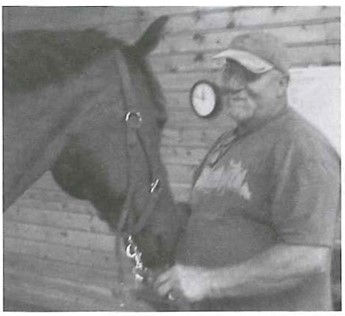
The only thing that Jenson and Friedli said they would change about their AgrAbility experience would have been to have heard about the program sooner. “When I first started talking to these people I had no idea how accommodating the program was,” said Jenson. “It’s been more than adequate.”
To new AgrAbility clients, Jenson says, “I really believe that if you have a need and a dream, that DVR and AgrAbility is a way to help pursue your dream. So many people let money and finances stop them from dreaming and this has certainly been a completion of a dream for me.”
From the Intern
My name is Hannah Gerbitz. I am a senior majoring in Dairy Science and Life Sciences Communication at UW-Madison. For those of you that I have not had the pleasure to meet, I have been the AgrAbility Program Assistant for the last ten months. I started last summer as a part time AmeriCorps Member and stayed on through the school year after that term ended. I am now referred to as the AgrAbility Program Assistant, or sometimes, intern.
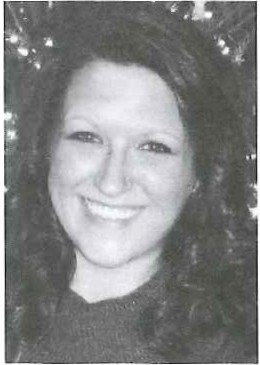
I was raised on a small dairy farm, so agriculture has always been a big part of my life. My family sold our cows when I was younger, but I stayed involved by showing dairy animals th rough 4-H and participating in dairy judging and quiz bowl. This led me to pursue my degree in Dairy Science and to become involved in many agriculture-related clubs and positions.
I have greatly enjoyed my time here at AgrAbility. The opportunities I have had to meet clients, work the tradeshows, work on the newsletters, and further develop our social media are just a few of the chances I’ve had to step outside my comfort zone and advance my personal skills. Given the broad view of agriculture offered by this program, I feel that I have learned a lot about myself and others and have prepared myself for life after college.
This has truly been an eye-opening experience, and I am inspired every day by the stories of the determination of the farmers. I am looking forward to opportunities this spring, including the WPS Farm Show; the first time I will be in charge of the booth myself (stop in and see me!), and presenting at the National AgrAbility Training Workshop.
I appreciate the program’s flexibility that has allowed me to work on projects I have selected and to get a very broad range of experience in areas I am interested in and passionate about.
I have accepted another internship for the coming summer, but I will never take for granted the effect this program has had on me. I hope to return to my position for my last semester of school this fall. Until then, thank you to everyone who had a part in making this experience great!
Farm Safety: Tractor Rollovers
Tractor rollovers are the single deadliest type of injury incident on farms in the United States. Rollover protective structures (ROPS) were not standard on tractors until 1985. OHSA now requires ROPS and seatbelts to be installed on all tractors that farm employees will operate.
The National Farm Medicine Cener has started an intiative to have ROPS installed on Wisconsin tractors.
The National Farm Medicine Center’s new tractor rollover protection program got off to a rousing start on September 20 when the annual Auction of Champions used an auction-within0an0auction called Fund-A-Need to raise more than $43,000 to pilot the initiative.
The money will be used to encourage the installation of Rollover Protective Structures (ROPS) on approximately 50 tractors in Wisconsin, reimbursing up to 70 percent of the purchase and installation. A rollover protective structure refers to operator compartment structures – usually cabs or roll bars – intended to protect farmers from rollover injuries. Tractor rollovers are the leading cause of death on farms.
The program is scheduled to be operational in summer 2013. To sustain it, the Farm Center will seek funding from other sources, such as foundations, coops, insurance companies and government.
Brian H. Ewert, M.D., Marshfield Clinic President recently purchased a ROPS for his tractor. “As I learned about the importance of these systems, I realized that my own personal tractor didn’t have a rollover protective structure. I recently purchased my own ROPS and had it installed. I can see first-hand how important these systems are to the safety of the farmers operating these machines.”
ROPS are one of the most effective known safety interventions, and are 99 percent effective in preventing injury or death in the event of an overturn when used with a seatbelt.
The Auction raised a total of $246,000 to benefit the work of the Farm Center. Proceeds support initiatives.
|
|
This material is based upon work supported by the Cooperative State Research, Education, and Extension Service, U.S. Department of Agriculture, under special project number 2014-41590-22330. UW-Extension provides equal opportunities in employment and programming including Title IX and ADA. If you need this material in another format, please contact AgrAbility of Wisconsin at (608) 262-9336. |
 Plowing Ahead