
Combating Cancer; Continuing to Farm
How did Dale Peterson do it? As he would tell you, “I have some awesome neighbors, I could not have made it without them.” He admits he is in the middle of nowhere, but enjoys the quietness and knows that he has a whole community of people supporting him even if they are a few miles away.
Dale grew up on a farm with his parents who had Holsteins. Today he owns the farm and has made the switch to jerseys, having to accommodate for the changing Holstein cow that islarger in size than it was 20 years ago and because his barn has smaller stalls. Dale milks 36 cows and has 120 acres of land. Seventy- two of these acres are tillable, and the rest is pasture.’) With limited tillable acre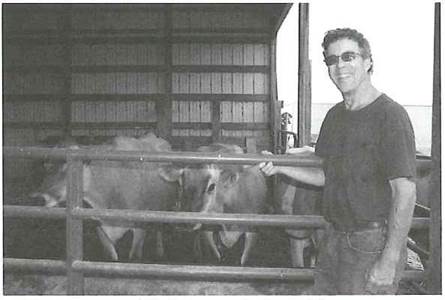 s, Dale does buy some of his feed.
Farming is what Dale grew to love, and he couldn’t imagine himself doing anything else. In 2011, Dale was diagnosed with cancer. A tumor was found in his right knee and the area slightly abovk. To remove the cancer, Dale went through chemotherapy and had a total knee replacement, during which two inches of his femur was removed. A pin was placed inside the femur to connect it to the knee. Later, Dale had to undergo another surgery to remove another two cancerous inches of the femur and to cement the pin in place, delaying his rehabilitation.
Dale heard about AgrAbility through a friend who is working with AgrAbility, and got in touch with his local DVR office, where he was told he would qualify for assistance. Although Dale is still waiting for some of the recommended accommodations, he has received a baler with a chute, a Kubota utility vehicle, a calf cart trailer to pull on the back of his utility vehicle, and automatic wagon hitches. Some accommodations yet to come include: a feed bin with an auger and cement pad, a fence line feeder with headlocks, and a drive-thru gate. When asked what his most helpful accommodation has been so far, Dale said he really benefits from the baler with a bale chute. Since Dale’s ration for his cows entails feeding a large amount of dry hay, this accommodation makes feeding less stressful on his body.
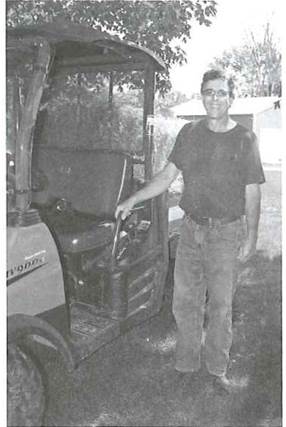 When Dale found out he had cancer and had to start chemotherapy, he didn’t know if he was going to be able to continue farming. Jeff, the Rural Rehabilitation Specialist working with Dale, said, “Dale is determined to maintain his farming operation, despite knee problems caused by the cancer and subsequent surgeries. The accommodations provided will significantly improve his ability to do that.” With the help of the AgrAbility program, his community, and neighbors, Dale has found a way to continue doing what he loves and to fight through the battle of cancer. Dale hopes to continue farming for many years to come.
–Ami Cooper
Make the Most of It
As you know, harvest season is a very busy time of year. Taking a little extra time to make sure your equipment and practices are safe can go a long way for your productivity; especially because harvest time is also a very dangerous time.
Injuries generally stem from taking shortcuts in routine tasks, lack of sleep, or disregard for basic safety practices. At this time of year, injuries often occur around the intake area of harvest machines. Slips and falls around the equipment are also common.
The harvest season presents the largest amount of exposure to powerful farm machinery. Since some of this equipment is only used once per year, farmers may be less familiar with the safety procedures that go along with it.
Farmers are well aware of the dangers associated with the intake area on equipment. However, the speed at which injuries can occur in this area is often miscalculated, and accidents often happen when trying to unplug a machine. To avoid entanglements and other accidents, it is very important to follow these safety steps.
- Always disengage power and turn off the engine before trying to manually clear a pl ugged machine.
- Never try to pull or remove twine or wire from a bale case or knotter when the baler is being operated.
- Never try to feed twine by hand.
- Always keep protective shields in place.
- Before going to the field, check the condition of machine components that pull the crop into the processing area, replace worn parts, and check clearances.
- Develop a weed management plan to keep weeds from plugging up equipment.
- Keep machinery clear of mud, crop residue, and other debris.
- Inspect your work shoes to ensure that they have adequate traction.Wishing you a safe and successful2013 harvest!
Adapted From: Iowa State University
Extension “Safe Farm,” March 2013
Meet the Team: Paul Untiet and T Ellenbecker
Rural rehabilitation specialists, case managers
AgrAbility of Wisconsin clients have had the chance to work with Paul Untiet or T Ellenbecker, Rural Rehabilitation Specialists and Case Managers. They discuss with farmers the potential resources available through AgrAbility and guide our farmers through every process along the way.
Since most of their work is done over the phone, not many of our clients have had the pleasure of meeting them face to face, so they have graciously agreed to share some insight into their lives.
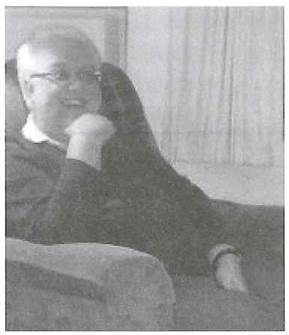 Paul has been with the FARM program for six years and T for 13, but their careers working together go farther back than that, as do their qualifications for their work as case managers. Because Paul and T both come from farming backgrounds, they appreciate the passion farmers have for their work and the drive they have to stay on the farm.
Before beginning work for the Easter Seals FARM Team, Paul and T both served as counselors for DVR (Division ofVocational Rehabilitation) in Marathon, Wood, and Taylor counties.,Both of them had close relationships with FARM specialists who worked with their clients. T had the largest DVR case load of farmers in the state.Upon his retirement from DVR, Paul was approached by Paul Leverenz, Vice President of Easter Seals and Director of the FARM Team. When Paul was asked to become a part time case manager, “the opportunity to utilize my skill and remain involved in the vocational field I enjoyed was just what I wanted.”
T began working part time for the FARM Team in 2000, five months after her retirement from DVR. “Paul and I provide guidance services to address farmers’ needs and follow up services,” she said.
Paul and T’s support of clients through telephone interviews and conversations is the second “step” in the AgrAbility process, after the client has been enrolled in the program.
Through these conversations, and through skillful listening, Paul and T determine whether or not our program is the right one for the farmer, and what resources would be best for each situation. “I review with the farmer how the program will work with the farmer and DVR to resolve disability related accommodation needs so that the farmer can continue to do the work they enjoy,” Paul explained.
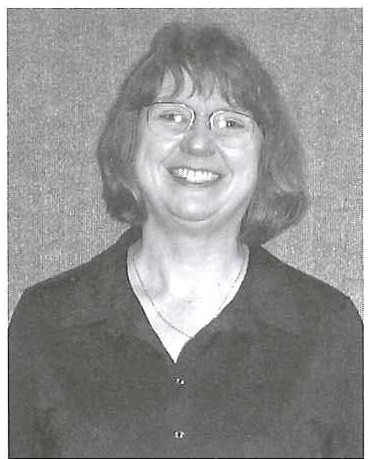 Using their backgrounds in farming and rural rehabilitation, Paul and T make themselves available for support during the farmers’ initial contact with DVR if that is the appropriate resource, and they discuss options and provide guidance around barriers through every step. “Throughout the entire process working with the farmer, we provide guidance and support,” said T.
Although Paul and T each work from their homes, they work well as a team. “Paul’s and my work styles complement each other,” said T. “We have a good working relationship consulting on cases and providing each other with new resources, funding options, and changes to available services.”
Paul said his favorite part of his job is “hearing the farmer realize that there is a way to continue in the job they love with a reduction in the functional
issues they are encountering from their disability.”
When T was asked what her favorite part of her job was, her response was, “Hearing people’s stories and how their lives have impacted others. A person doesn’t realize how many lives they touch during their lifetime.” Because T married into a large farming family and has worked personally with many farmers through her own business, she knows personally the importance of a farmer’s work.
Having grown up on a dairy farm himself, Paul fully understands the passion a farmer has for his work. “Doing what we love to do for work makes us all happy, and the fear of having to stop doing what we love is pretty traumatic,” he says. “When I can help the farmer realize they don’t have to stop farming and hear the happiness in their voice, I feel good.”
|
|
This material is based upon work supported by the Cooperative State Research, Education, and Extension Service, U.S. Department of Agriculture, under special project number 2014-41590-22330. UW-Extension provides equal opportunities in employment and programming including Title IX and ADA. If you need this material in another format, please contact AgrAbility of Wisconsin at (608) 262-9336. |
 Plowing Ahead