
Vol. 24 No. 4
The Truth about Farm Succession Planning
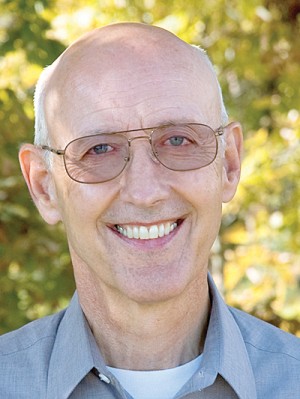
Do you know where you want your farm to be in 10 years? Is there a plan in place to help your next generation? Will your farm outlive you? These are all questions farmers and families will have to face, but it can be easier with a succession plan. Succession planning is a vital process for all farm families. Planning helps to prepare the farm for future generations to make their vision a reality. Everyone involved in a farm should be considering succession planning, especially if they are over the age of 18. Frank Friar, an economic specialist at the Wisconsin Farm Center (WFC), works in the Beginning and Transitioning Farmer Program with farmers and families to help with succession planning. The number one goal of WFC is to keep farmers farming; this is a goal Friar shares. He has worked with farmers of all ages and situations, from older generations setting up for the future, to younger generations making sure there is a plan in place.
When it comes to succession planning, Friar says: “It is never too early and it is never too late.”
Of course, Friar encourages families to start succession planning as early as they can. A tip to assist with farm transitioning and succession planning is to keep good financial records, and knowing where those records are. Whether a family is ready for succession planning, or just wants more information they should start by contacting the WFC.
The WFC staff, including Friar, will walk through the process using the farm’s background information to discuss the possible options for the farm and family. Staff will travel to the client’s home to make this process just a little less hectic for the family. When a family is working with WFC, they form a team with an attorney, accountant and, possibly, a facilitator. The team is there to support and help them through this process.
Friar warns, “Transition planning is a journey, not a one-day road trip.”
He encourages families to start thinking about the hard questions that come up during the process, including what each person’s hopes, goals, and fears are for their farm’s future.
To aid with those answers, Friar tells clients to think about where they would like to see the farm in 10 years.
While Friar and WFC staff encourage farmers an families to put a succession plan in place, sometimes the plan is not always a priority for families. Waiting to create a plan should not be one of the options farm families choose. Friar said, “The number one reason people don’t want to create a transition plan is because they don’ want to give up control. But not having a plan gives you no control.”
Without a plan, the family may not have any control over where the farm goes and how it is handled. Without a plan, the assets are distributed according to the Wisconsin State Law, leaving the control in the hands of people who are not involved in the farm. The farm can be designated to any children, siblings, or relatives of the owners. This situation does not allow the family to appeal, and they will have no control over the farm, the person(s) it is given to or how it is split, if it is. In addition to the uncertainties, the farm could be subject to additional taxes and fees associated with courts, management of the estate, liquidating assets, and other consequences when there is no protection in place.
Transition and planning are difficult, no matter what the situation. Thinking about the future is hard and can bring up emotions that are challenging to handle.
Families can call the WFC as many times as they need to get answers for their questions or to just talk out some of the options, and when they are ready everyone can be brought in to the discussion.
The Wisconsin Farm Center is part of the Wisconsin Department of Agriculture, Trade and Consumer Protection headquartered in Madison. The Wisconsin Farm Center has many resources for farmers and farm families, including financial planning, farm transitions, conflict mediation, herd-based diagnostics, energy-related issues, minority farmer outreach, and counseling services.
More information about succession planning or these resources can be found at www.datcp.wi.gov/Farms/Wisconsin_Farm_Center or by calling 1-800-942-2474.
AgrAbility, Easter Seals, and Extension Celebrate 25 Years of Success
The year 2016 marks 25 years of AgrAbility! As part of our celebration, we would like to thank our partner agencies and explain how AgrAbility, the University of Wisconsin-Madison, UW-Extension, and Easter Seals and the FARM team work together to keep our Wisconsin farmers on the farm through disabilities, injuries, and accidents.
AgrAbility has provided services to nearly 3,000 Wisconsin farmers, maintaining a 98% success rate in helping farmers stay on the farm. Between 2014 and 2015 alone, almost 600 farmers received this assistance.
AgrAbility assists all types of farmers, from rabbit, fruit, vegetable and orchard, to large dairy, beef, and grain operations. Some of the most common disabilities seen by the program are arthritis and back pain, and range from amputations to mental illnesses.
AgrAbility exists as a partnership between the University of Wisconsin-Madison and Easter Seals Wisconsin. The AgrAbility project was a grant originally awarded to the University by the United States Department of Agriculture (USDA) in 1991. The project has been renewed every year since, for a total of 25 years this year.
AgrAbility’s staff works out of an office located on campus at UW-Madison. They are UW employees and are considered part of UW-Extension. Being part of Extension allows special access to recent and relevant information and technology from agents and specialists in every agricultural discipline.
The AgrAbility staff is responsible for the marketing and outreach of the program, as well as the enrollment of new and re-opening AgrAbility clients. The AgrAbility staff are the voices you hear on the phone when you call the AgrAbility office, and the faces you see at trade shows and events around the state.
Easter Seals is the non-profit partner on the AgrAbility project, whose mission is to increase independence, maximize opportunities, minimize barriers, and enhance the quality of life for people with disabilities. FARM stands for Farm Assessment and Rehabilitation Methods, and is the division of Easter Seals that was developed in the early 90’s to provide vocational services to the rural population.
The Easter Seals staff are the people you’ll see out on your farms and hear on the phones guiding you through the maze of resources available for farmers with injuries and disabilities. Rural Rehabilitation Specialists work with farmers all over the state to identify limitations affecting farm tasks and discuss accommodations for disabilities. Some of the partner agencies and organizations we direct our farmers to include the Wisconsin Farm Center, the Farmer Veteran Coalition, and the Harvest of Hope Community fund. Farm transition and succession services are available through the Wisconsin Farm Center.
Collectively, AgrAbility, Easter Seals and the UW-Extension provide resources and ideas for farmers with disabilities and injuries. These resources include opportunities for networking and support, an on-farm assessment by a rural rehabilitation specialist, development of plans for accommodation, identification of suitable assistive technology, gathering multiple cost estimates for equipment, working with the Division of Vocational Rehabilitation (DVR) counselors to discuss farm issues, and case management to assure that the plan is successfully implemented.
Disclaimers
AgrAbility, Easter Seals, UW-Extension, nor the University provide the funding for modifications to farms or equipment, or directly items such as tractors, skidsteers, or utility vehicles and never have provided the funding. Farmers that are seeking funding for assistive technology or equipment to address disabilities in order to remain employed may apply for other resources for an assessment to identify those needs. One such option is the Division of Vocational Rehabilitation (DVR).
There are two qualifications farmers must meet in order to enroll for AgrAbility services: 1) They must meet the USDA’s definition of farming, making $1,000 gross income per year from an agricultural operation, and 2) They must have some type of injury or disability.
For more information or to sign up for services, contact the AgrAbility office at 608-262-9336 or agrability@wisc.edu.
We Welcome Rachel to our Summer Internship Program!
Welcome to our new summer intern, Rachel Gerbitz! Rachel is from Milton, 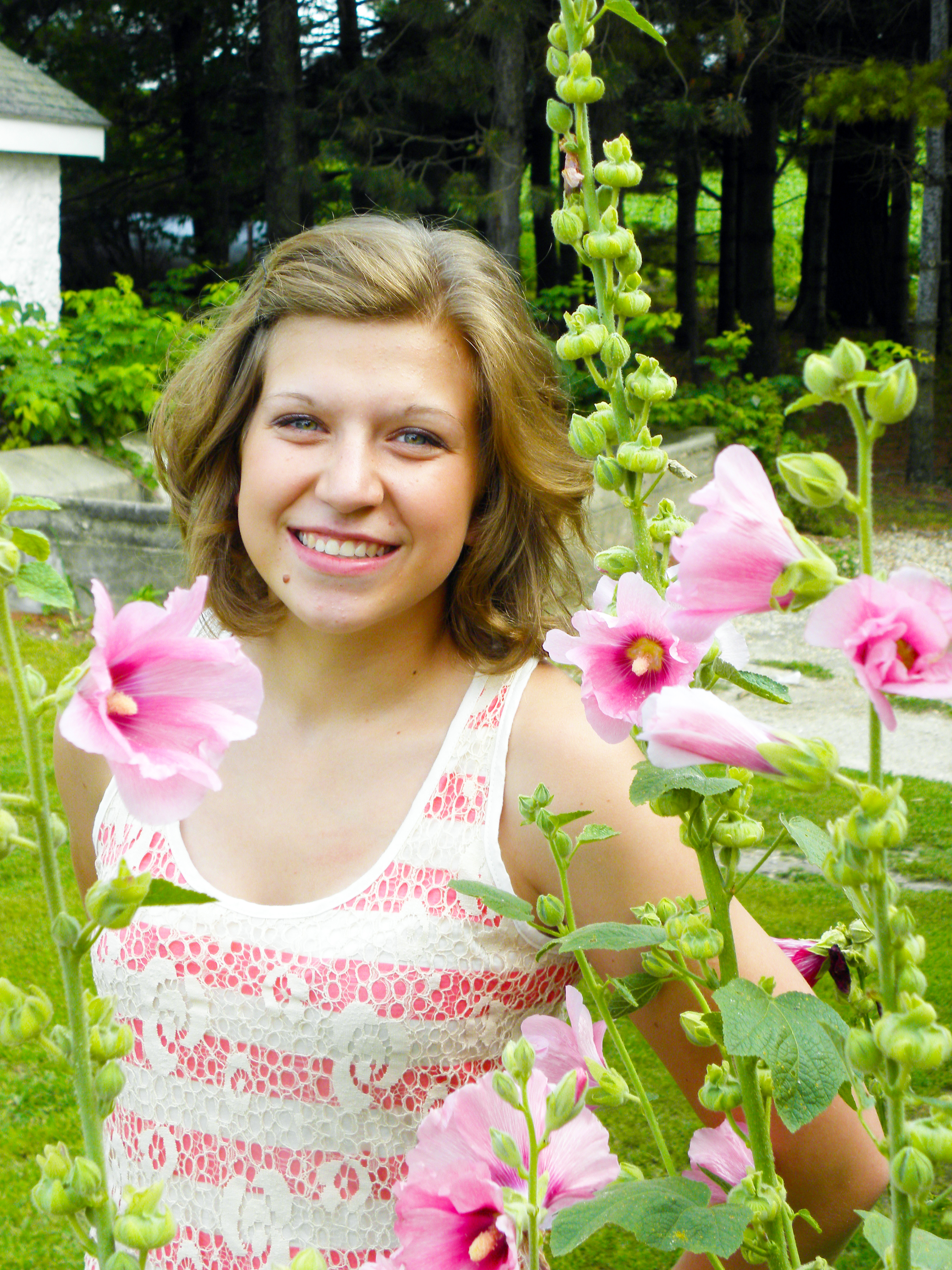 Wisconsin and is studying Dairy Science and Life Sciences Communication at UW-Madison. On campus she is involved in the Association of Women in Agriculture, Badger Dairy Club and Collegiate Farm Bureau. She is also a member of the LaPrairie 4-H Club, Rock County Junior Holsteins, and the Wisconsin Jersey Breeders Association. Rachel is excited about the work AgrAbility does and the opportunity to work with everyone involved. She is also very interested in the communications field and is looking forward to improving those skills through this position.
Welcome, Rachel!
AgrAbility Summit Recap
AgrAbility of Wisconsin held its annual summit on March 23rd at the new Organic Valley Office Building in Cashton, Wisconsin. The day started with an introduction from the AgrAbility of Wisconsin Director, Richard Straub, and Organic Valley’s Director of Employee Service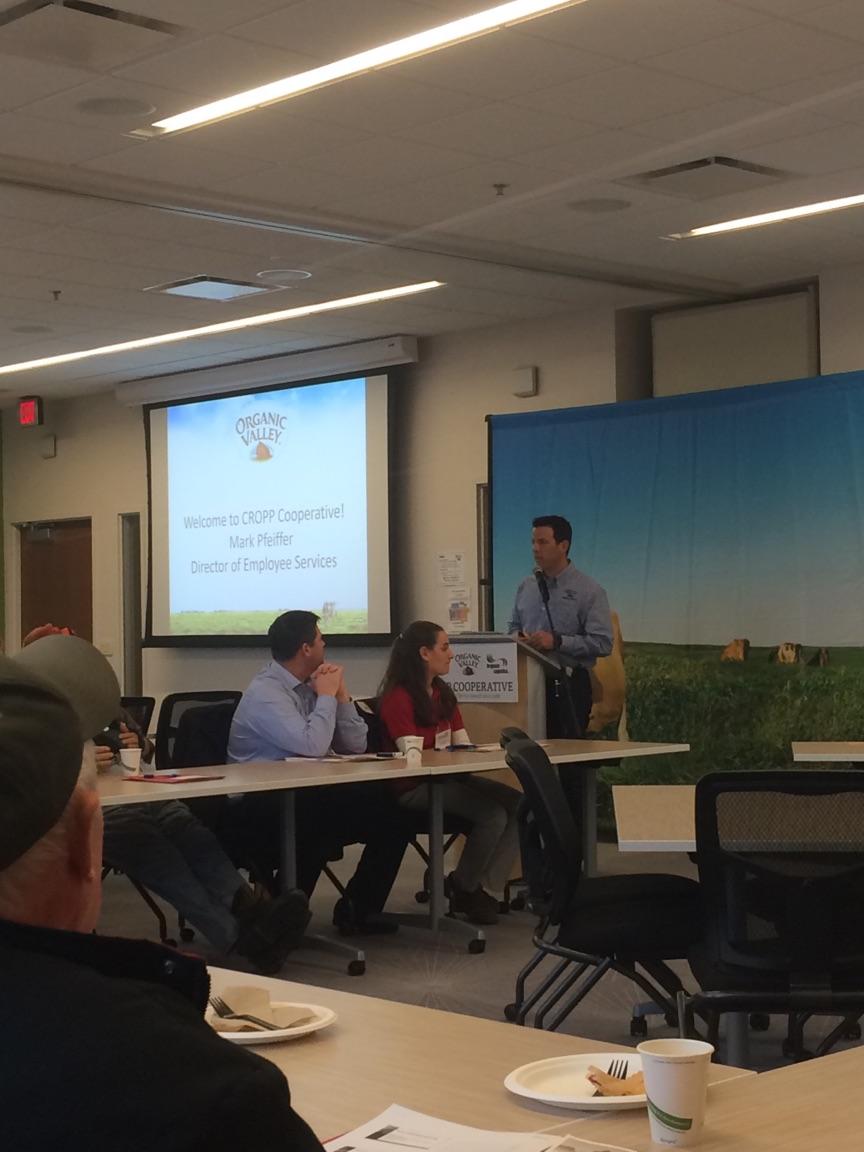 s, Mark Pfieffer.
The first presentation was led by Frank Friar, Wisconsin Farm Center’s Economic Development Consultant, who works with farmers on a daily basis, helping with their plans for succession, transition, and other situations. In the presentation, Frank discussed a road map for farm transitions to evaluations of financial stability for retirement or beginning farmers.
The attendees of the AgrAbility Summit were able to tour the new Organic Valley facility followed by a lunch prepared by Organic Valley’s cooking staff.
Jeff Kratochwill and Ami Cooper, Easter Seals Rural Rehabilitation Specialists, along with Steve Humfeld, Wisconsin farmer and AgrAbility client, presented information about assistive technologies available for farmers.
The AgrAbility staff appreciates all of the attendees for participating, the speakers for taking time out of their day and Organic Valley’s unbelievable hospitality while hosting this event. Even with a little snowy weather, it was a great day.