Fenske Story
Sometimes farming is in your blood, even if you are not born into the tradition. This is the case for Ellsworth beef farmer Bob Fenske and his wife, Carol. Bob was familiar with the farming lifestyle because he spent a lot of time at his aunt and uncle’s dairy farm when he was growing up. Bob helped a lot with the field work, and even after a chopper box accident nearly 50 years ago resulted in the amputation of his right arm, he did not let his passion for agriculture fade. He continued to be passionate about farming into his adult life, even though he didn’t live on the farm.
Prior to farming, both Bob and Carol taught high school in Ellsworth. Bob was the Industrial Arts teacher and Carol taught Home and Consumer Economics. One day, on their way to school, they passed a “For Sale” sign; they decided to put their house on the market and buy the farm. The whole process of selling their house and moving onto the new farm went very quickly and the family’s dreams were coming true right before their eyes.
Bob and Carol, along with their son, currentl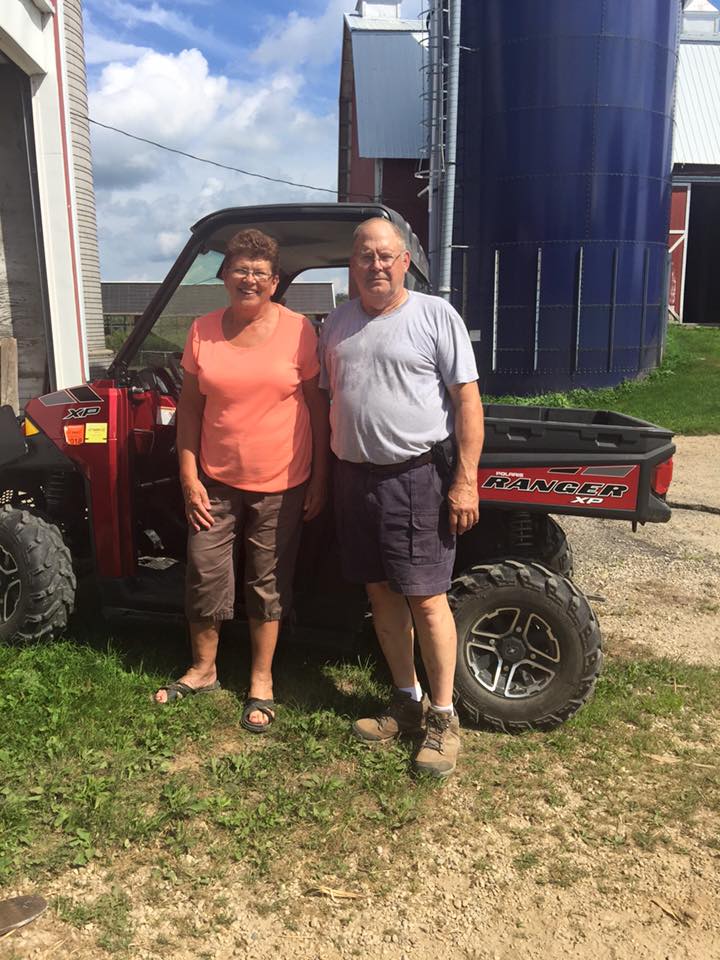 y operate a 1,000-cow beef cattle operation. They purchased the farm 35 years ago. They continued to expand and now have six farms in their operation. All of their cattle are purchased from a dealer; they administer all of their own shots and implants. The main farm is currently owned by Bob and Carol’s son, but the pair stay very involved in this family business. Bob and Carol made a number of modifications themselves. Bob is a talented welder and builds many things on his own, including feed bunks and workshop storage.
Bob works hard every day, caring for his animals and tending to the fields. These activities can take a toll on the body, especially when completing his tasks with only one arm. Bob’s arm was amputated just below the shoulder. Nerve damage from the amputation makes the location of the amputation very sensitive to changes in the weather, a condition doctors call “jumpy stump.” This pain and sensitivity made it difficult for Bob to work on the farm during the cold winter months and hot summer days.
Following an assessment by an Easter Seals rehabilitation specialist, a utility vehicle was recommended. Bob and Carol tried out several different options, but the Ranger was the best fit for them. It was the easiest to get in and out of and was considered reliable; it has held up tremendously in the time they have owned it. The Ranger has power steering and heat control, which make it easier on Bob to be out in the elements. Prior to having the Ranger, it was practically impossible for Bob to herd the cattle on foot; but now, with the utility vehicle, he herds with ease. Because the cab of the Ranger has heat controls, Bob can check on his corn fields and gets jobs done around the farm long into the colder fall months.
A skid steer with temperature controls was recommended so Bob could continue working on the farm in extreme weather without added pain in his right shoulder area. The skid steer also features one-handed steering and foot controls to raise and lower the bucket so he can operate it with ease. This modified skid steer allows Bob to be much more involved with the farm.
Bob also uses a hydraulic-powered cattle chute to handle his animals. This chute, with a few adaptations the Fenskes made to it, aids the convenience and safety of giving shots, implants and variou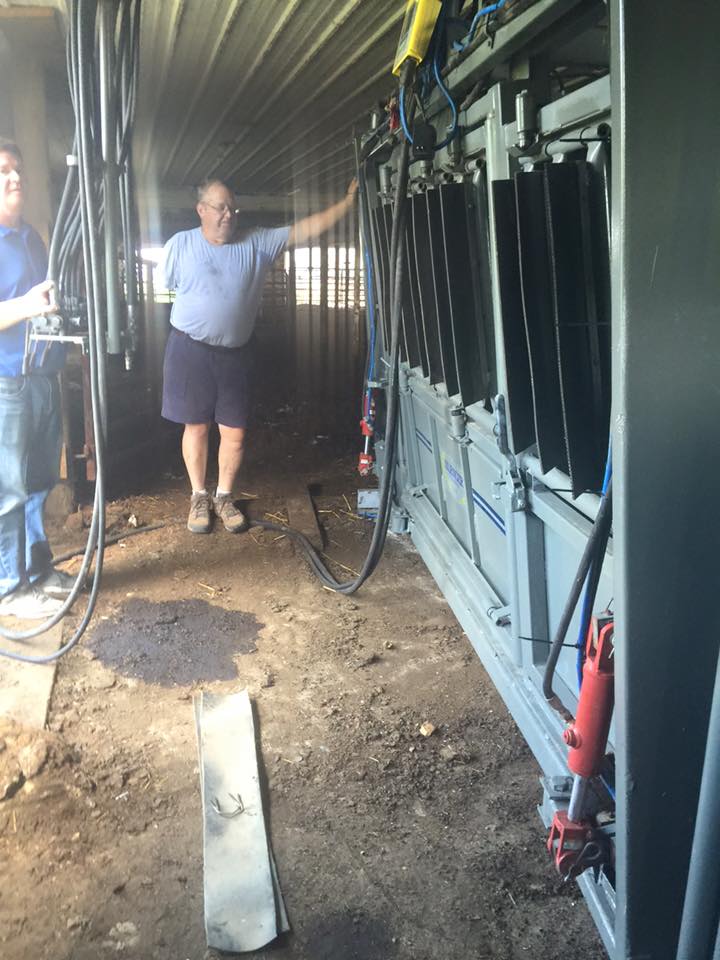 s other animal-care activities for everyone involved. Bob guessed that they have run more than 30,000 head of cattle through the chute over the years. It takes a team effort to operate the chute, so the Fenskes work together to make the process a smooth one.
The Fenske farm is family oriented, and Bob enjoys involving his younger grandchildren. Often the children ride along in the Ranger, making it easy for Bob or Carol to watch them and keep them safe while performing farm tasks. Bob hopes that someday his grandchildren will stay on the farm, and works to ensure that they enjoy the time they spend there. Many of the improvements Bob makes to his farm are made with the future generations in mind, and the goal of keeping the children excited about farm work.
Bob and Carol said that without the help of AgrAbility, Easter Seals and Division of Vocational Rehabilitation (DVR), they would not be farming today. They credit their recent ability to expand the operation on the success they’ve enjoyed since receiving assistance. Because of the AgrAbility partnership and the dedication and hard work of the family, the Fenskes will be successfully farming for years to come.
Manure Safety
The Wisconsin agricultural community was shocked to learn of the death of a young beef producer this past August. He was found dead early in the morning alongside a non-enclosed open-air manure storage area. Later that morning, sixteen beef steers were found dead in the adjoining feedlot. In September, the coroner ruled that his death was accidental, due to hydrogen sulfide poisoning, based on toxicology reports.
Since that time there have been several additional losses of steers reported in Wisconsin, Illinois, Iowa, and in Ontario, Canada. These incidents all occurred when manure was being agitated for pump out. Additionally, there were two related confined-space incidents in Michigan and near Quebec, Canada, as reported in the media.
It is unclear at this time why there has been this uptick in manure gas incidents this year. The one known factor is that when manure is agitated, gases are released. Numerous gases are released while manure is decomposing in storage, but during agitation the gases of concern for human and animal health are hydrogen sulfide, methane and ammonia.
“The gas that we are focusing in on at present time is hydrogen sulfide,” explained Cheryl Skjolaas, Agricultural Safety and Health Specialist with the University of Wisconsin Madison/Extension Center for Agricultural Safety and Health. “Hydrogen sulfide is a toxic or poisonous gas that is heavier than air. It will stay lower to the ground and it takes greater stirring of the air to make it leave the area.”
Health effects of h ydrogen sulfide vary depending on exposure time and the concentration to which a person or animal is exposed. In humans, health effects from low concentrations are irritation of the eyes and the respiratory system. Moderate concentrations cause increased eye and respiratory effects, along with headache, coughing and difficulty breathing. Hydrogen sulfide is considered Immediately Dangerous to Life and Health (IDLH) at 100 ppm. At that level, or higher, an individual may experience convulsions, shock, and become unable to breathe, and a few breaths can cause death. Individuals with any respiratory conditions or asthma would be at greater risk.
Using a gas monitoring device is the only way to know what concentrations of manure gases are present during agitation, pump out or entry into a manure confined-space storage and handling situation. “Recently we were using a multi-gas monitor with an under-barn, deep pit manure storage,” said Skjolaas. “While we expected readings for hydrogen sulfide, it surprised
us that in a matter of seconds hydrogen sulfide was released at 50 ppm down in the port. In under five minutes, hydrogen sulfide was being measured in an empty pen above the area being agitated, reaching concentrations at the lower alarm limit of over 10 ppm.”
Ventilation is another key factor in addressing manure gas safety. Before entering a confined space, ventilation can remove gases and help provide fresh air. When not able to ventilate out a confined space, persons entering the space need to be using supplied air respirators. Around non-enclosed open air manure storage or naturally ventilated storage, the first step is determining wind speed and direction before starting any agitation or pumping. If the winds are calm, it’s foggy; or if there’s an air inversion in the area, it’s best to wait before starting agitation. The agitator will also have an impact over where the hydrogen sulfide disperses, so consider which way it is directed and keep it under the manure surface.
Manure gases are not a new safety concern. Safety strategies continually need to be reviewed and addressed as manure handling and storage factors change.
25 Year Celebration
The AgrAbility staff hosted their 25 Year Celebration event on September 29th in Arlington, Wisconsin, to acknowledge the hard work, dedication, and the success achieved by the program and its clients. Attendees were greeted by various presenters, including: Ben Brancel, Wisconsin Secretary of Agriculture; Delora Newton, Division of Vocational Rehabilitation (DVR) Admin istrator; and Paul Leverenz, Vice President of Easter Seals Wisconsin and Director of the FARM Team. The Farmer Panel, consisting of Keith Posselt, Mary Dunn, and Alan Kaltenberg, discussed their lives on the farm, their limitations and disabilities, and various changes they made to keep farming, with and without the help of AgrAbility, Easter Seals, and DVR. To finish off the event, Chad Hermanson, owner of Half Moon Outdoors and Action Trackchair representative, and Larry Bonifas, Propel Automation Sliding Doors, gave demonstrations on how their assistive technology can work around the farm.
Five Common Questions and Answers about Farm Transition and Succession Planning
What is succession planning and why is it important?
A succession plan is a formal process to ensure proper transitioning and ownership from one generation to the next. Having a succession plan in place allows the farm family to set up a plan exactly how everyone involved in the farm wants it. It also helps to plan for the legal aspects, taxes, and possible family relationship issues before a member of the family steps down from the farm or passes away. In a perfect world, these situations would work themselves out without any issues, but family matters are rarely easy to figure out and are difficult to discuss. It can help to work through these discussions with a professional, like the staff in the Beginning and Transitioning Farmer Program at the Wisconsin Farm Center (WFC).
When should the process of succession planning begin?
The short answer is right away. Frank Friar, an Economic Specialist at the Wisconsin Farm Center says, “It is never too early and it is never too late,” but encourages families to start the succession planning process as soon as possible. Including everyone who is involved in the farm when starting the process ensures all of the ideas for the future are heard.
What should the family be thinking about when starting to plan for succession and transition planning?
The family members should start thinking about where they see the farm in the future. Talking about where the members and successors see the farm is essential to making sure that the plan follows what all members want. To make the transition easier, Friar encourages families to continue to communicate about their plans, keep good financial records and know where these records are kept, and then make a call to the WFC. The WFC staff will walk the family through the process, letting them know about every option possible.
What are some problems that might happen if a succession plan is not implemented?
Many families have all the intentions to put together a succession plan, but never get around to it or find other reasons to avoid the difficult discussions. Friar mentions, “The number one reason people don’t want to create a transition plan is because they don’t want to give up control, but not having a plan gives you no control.” Without a plan in place, it is Wisconsin State Law that the assets get distributed, putting the farm through a long process that the family has no control over and there is not an appeal process. Another problem is probate tax. If a transition plan is designed the probate tax can be avoided, but if there is not a plan there is a 2-3% probate tax, depending on the county the farm is located. Other fees that may be encountered if a plan isn’t in place include court fees and costs to liquidate assets.
Who is involved in the transition and succession planning process, other than the family?
This depends on who the family wants to involved in the process. To create a successful succession plan, a family should create a team that typically includes professionals, like WFC staff, an attorney, an accountant or tax professional, and a mediator, if necessary. It is easier to have a professional to help mediate the discussions since family matters are never easy to bring up around strangers. Fortunately, the staff working at the WFC have worked with hundreds of families throughout Wisconsin to help with financial planning, conflict mediation, and counseling services. The staff works with the farmer and their professional team helps to put together a succession plan, which is finalized when the family works with an attorney.